

Château Labégorce
The Estate
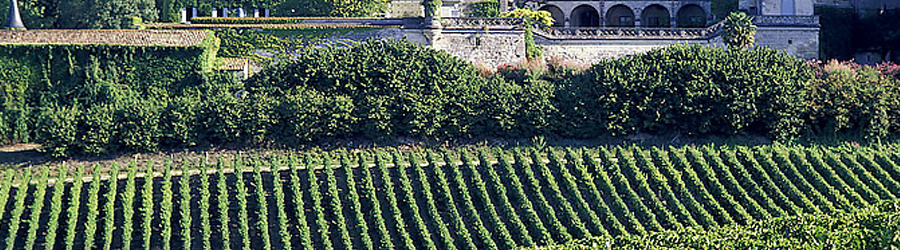
This elegant, neoclassical château is located in the heart of Margaux, on the famous Route des Châteaux. Approximately 70 hectares of the 250-hectare estate are devoted to viticulture. Unusual for Bordeaux, they own a small 4-hectare plot of vines over 100 years old. The remainder of the vines were planted from the 1950s onwards.
Bordering on Châteaux Margaux and Lascombes, this property is mentioned in the 1868 edition of Cocks and Feret (“Bordeaux and its Wines”), which tells us of the existence since 1332 of “a vineyard belonging to the noble La Bégorce family”. The château is described as “… one of the most beautiful and best situated in the town of Margaux”.
The Perrodo family acquired Labégorce in 1989 and renovated not only the château building, but also the vineyard. It was Hubert Perrodo’s dream to join the previously divided estates of Labégorce and Labégorce-Zédé, and this was finally achieved in 2009. After Hubert’s untimely death due to a skiing accident, his daughter Nathalie took over ownership of the chateau, and runs it to this day.
The wines of Labégorce are charming with beautiful structure, bright fruit, and great finesse, and are some of Bordeaux’s most in-demand wines on the marketplace.
Zédé de Labégorce
Overview: Zédé de Labégorce is the second wine of Château Labégorce.
Owner: Nathalie Perrodo
General Manager: Marjolaine Maurice de Coninck
Surface Area: 70 ha
Grape Varieties Planted: 50% Cabernet Sauvignon, 45% Merlot, 3% Cabernet Franc, 2% Petit Verdot
Annual Production: 120,000-140,000 bottles
Aging: 12-14 months in barriques (40-50% new wood)
Soil: 70% sandy gravel, 30% sand and silt
Château Lafite Rothschild
The Estate
“Lafite has a soul, a beautiful, generous, kindly soul. Lafite turns bare earth into heaven. Lafite is harmony, a harmony between man and nature, because without our magnificent winegrowers, nothing would be accomplished.”-Baron Eric de Rothschild
In 1815, Guillaume Lawton said of Château Lafite, “I consider it to be the the most elegant and delicate, with the finest substance of the three (Premier Crus). The location of its vines is one of the finest in the Médoc”. In 1855, the Château was ranked as a Premier Grand Cru in the famous classification that was prepared for the Universal Exhibition of that year.
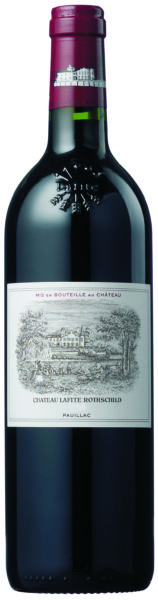
Château Lafite Rothschild Pauillac 1er Cru Classé
Grape Varieties: 80-95% Cabernet Sauvignon, 5-20% Merlot, 0-5% Cabernet Franc and Petit Verdot. Note that there are some exceptional cases such as the 1994 vintage (99% Cabernet Sauvignon and 1% Petit Verdot) or the 1961 vintage (100% Cabernet Sauvignon).
Aging: In oak barrels, 18 to 20 months in 100% new barrels
Annual Production: About 16,000 cases
Decanting: 2 hours or more
Serving Temperature: 16 -18°C
Château Lafon-Rochet
Overview
Chateau Lafon-Rochet is located in the Saint-Estèphe region of Bordeaux. Today there are 45 hectares of vineyards here, of which 40 hectares surround the château, while the remaining 5 hectares lie in a single plot approximately 1 kilometer to the north. The vineyards around the château sit on a plateau which they share with the vineyards of Cos d’Estournel and Cos Labory.
History
Lafon-Rochet’s history dates back to the 17th century. The property was then known as Domaine Rochet and belonged to Antoinette Guillemotes who renamed the estate Château Lafon-Rochet after her marriage with Etienne de Lafon. The Tesseron family took over the estate in 1960. When in 1960 Guy Tesseron (a master of old Cognac) took over the property, he had to start from scratch and rebuild the whole property. Thus began Chateau Lafon Rochet’s rebirth.
Michel Tesseron first decided to renovate and modernize all the technical equipment necessary for production, like the magnificent circular, wooden wine cellar. In so doing he preserved the family’s core values of sharing, respecting the vines and vineyard and thus fulfilled his father’s dream. In 2007, Basile Tesseron joined his father in order to continue the work started by his grandfather, who had already initiated the young Basile into the subtleties of the aromas and flavors of cognac.
With passion, humor and ambition, Basile pursued the work of his predecessors, enabling Lafon-Rochet to live on through the centuries. He began by redesigning the vat room of the property, and reviving the quest for excellence and quality in keeping with the exceptional terroir.
The Terroir
Acreage: 41 hectares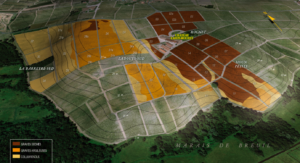
Soil: 3 different types: clay on gravel, clay, and sand.
Grape Varieties: 57% Cabernet Sauvignon, 37% Merlot, 4% Petit Verdot, 2% Cabernet Franc
Harvest: Manual
Vine Density: 9,000 vines/hectare
Average Age of the Vines: 37 years old
Average Yield: 40-50 Hl/Ha
Vinification
The grapes are always harvested by hand; an experimental venture using machines for the harvest was carried out in 1986 but was deemed a failure. The grapes are sorted twice before fermentation in stainless steel vats which range in size from 230 hectoliters down to 20 hectoliters. The temperature is controlled to a maximum of 30ºC, with pumping over to submerge the cap as required. Subsequently, the wine is macerated for up to 2 weeks, before malolactic fermentation in tanks and barrels. The entire crop is aged for up to 20 months in oak barrels, half of which are new wood for each vintage. The wine undergoes fining or light filtration prior to bottling.
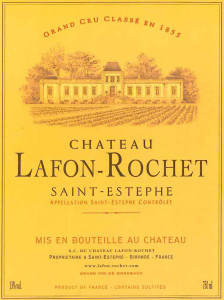
Chateau Lafon Rochet Saint-Estèphe
Overview: The grapes used for this wine come from the oldest vines of the vineyard; they bear less fruit but offer greater complexity. Lafon-Rochet is a wine that is both simple and complex-it expresses aromas of black fruit in most vintages. This is truly a blend with features specific to Saint-Estèphe, a certain warmth and roundness, full of delicacy coming from the Merlot grape varietal.
Production Area: 45 hectares
Average Yield: 44 hl/hectare
Soil: Deep gravel and clay
Average Age of the Vines: 40 years old
Grape Blend: Merlot, Cabernet Sauvignon, Cabernet Franc, Petit Verdot
Harvest: By hand into small crates
Aging: 16-18 months in light to medium toast French oak barrels (50% new wood)
Winemaker Notes: “The nose is pleasing, open, fruity, and oaky with notes of fresh pepper. The wine is agreeable and elegant in the mouth, with a subtle attack despite the boldness and power of the mid-palate and finish. The aromas are fruity, smoky and salty. This is a well-made and nicely structured wine.”
Food Pairings: Meat dishes and barbecue
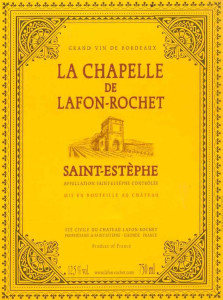
La Chapelle de Lafon-Rochet Saint-Estèphe
*Second wine of Chateau Lafon-Rochet
Production Area: 40 hectares
Age of the Vineyard: 15 years old
Annual Production: 10,000 bottles
Grape Blend: Cabernet Sauvignon, Merlot, Cabernet Franc
Harvest: Manually done
Vinification: The grape juice is left in vat anywhere between 15 days to 3 weeks. Fermentation lasts 6-8 days in thermo-regulated tanks.
Aging: The wine is matured in casks for 15-20 months in 40% new wood. Light fining is done using egg shells.
Tasting Notes: This second wine of Lafon-Rochet is rich, full, and concentrated; well-balanced and smooth on the palate.
Chateau Lagrange
The Estate
This estate was a place of great agricultural activity centuries ago. Initially called “Villa Rustica” in Gallo-Roman times, it was renamed “Grangia” in the Middle Ages which was the origin of the estate’s current name, Chateau Lagrange.
Lagrange discovered a vocation for winegrowing thanks to the Templars who united 2 domains: the “maison noble de Lagrange de Monteil” to the west joined the “Tenure of Pellecalhus” to the east. In the present-day vineyard, the names of two vine plots hearken back to this era, “l’Hôpital” and “La Chapelle.” After this unification, Lagrange became the largest wine producing estate in the Médoc.
In the early 18th century, Baron de Brane, a Bordeaux parliament member and owner of Mouton, acquired the property and its renown became more widespread.
In 1790, Jean-Valère Cabarrus, an influential merchant known to be very active in the shipping business, invested in the property and established his own sales network. In 1820, he commissioned Visconti to build the Tuscan-style tower that was to become the emblem of Château Lagrange.
During a trip to Bordeaux in 1785, Thomas Jefferson (then President of the United States), judged Lagrange second among the Third Classified Growths. In 1855, Lagrange was officially ranked among Third Classified Growths, thanks to the work of Count Duchâtel, owner from 1842-1874.
The Japanese group, Suntory, acquired the domain when the purchase was signed by the company president, Mr Keizo Saji, in 1983. Marcel Ducasse was then recruited along with Kenji Suzuta to undertake the complete restructuring of the vineyard and a spectacular renovation of the whole estate. After 20 years of dedicated work, as well as human and technical investments, Lagrange has once again found recognition amidst its peers and had achieved a certain sense of fulfilment.
Today, Matthieu Bordes and Keiichi Shiina have taken over this quest for excellence. A second phase of investments began with the 2008 vintage, offering Lagrange the technical means to follow its ambitions: The production of refined, elegant, and expressive wines, in the best Saint-Julien style. There has also been an evolution of production methods towards a greater awareness of the environment and a reduction of ecological impact on the property.
This philosophy is reflected not only in the respect shown for the domain’s history, and the nurturing of its truly exceptional terroir, but also in the unique experiences shared all over the world around a glass of one of Lagrange’s wines.
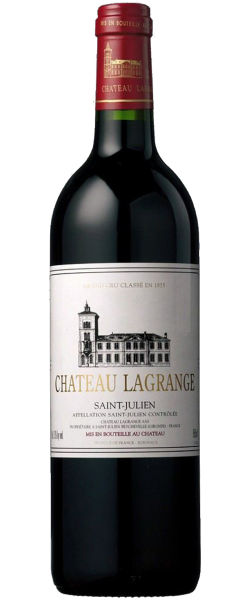
Saint-Julien 3ème Cru Classé
Location: Completely situated in the village of Saint-Julien, the estate is spread over 2 hills with the slopes directed towards the North and the South.
Soil: The subsoil is of clay and limestone and the topsoil is made of pebbles and gravel.
Production Area: 111 hectares in red vines.
Grape Varieties: Cabernet Sauvignon, Merlot, and Petit Verdot.
Plantation Density: 7,500-10,000 vines per hectare
Average Age of the Vines: 40 years old
Vines: “Medocain” fixation on 3 wires to get the best sun exposure possible. Pruning to control the yield (4 to 6 buds left). Controlled phytosanitary treatments. Thinning of the extra grapes in July. Thinning out of the leaves in July on both sides of the row to improve the air circulation an reduce the level of humidity in the grapes. Maturity checking per plot
Harvest: Hand picking into individual crates. 120 pickers on average recruited according to the daily needs by a specialized agency, allowing a considerable flexibility of harvest to optimize the ripeness. Last sorting grape by grape with an optical camera. Plot by plot vinification in 98 stainless steel vats of which 78 are small capacity (66 to 90hl). Co-inoculation allowing simultaneous alcoholic and malolactic fermentations in the aim of protecting the wine and reducing the manipulation throughout the sensitive phase.
Vinification: First sorting by hand on whole bunches to eliminate those showing imperfections. Latest state-of-the-art de-stemmer less damaging for the grapes. Intra-plot selection thanks to 98 tanks. The contents of vats are selected according to the grape varieties, the age of the vines, the terroir, and the maturity. 220hl to 66hl stainless steel vats with thermo regulation. Moderate pumping-over everyday, pigeage. Maceration from 15 days to 3 weeks. Selection of free-run wine and of press wine. Blending selection of the Grand Vin (Château Lagrange) and the second wine (Les Fiefs de Lagrange) in February, following the harvesting. 12% of press wine in Château Lagrange. 40% Château Lagrange and 60% Fiefs de Lagrange.
Aging: Air conditioned cellars with regulated hygrometry. 60% of new oak barrels every year for Château Lagrange, maturing for 21 months. Maturing with the bung on top for about 6 months (2 top-ups per week). Racking every 3 months. Fining in barrel with fresh egg-whites — Final blending before bottling
Consultant Oenologist: Eric Boissenot
General Manager: Matthieu Bordes
Technical Manager: Benjamin Vimal
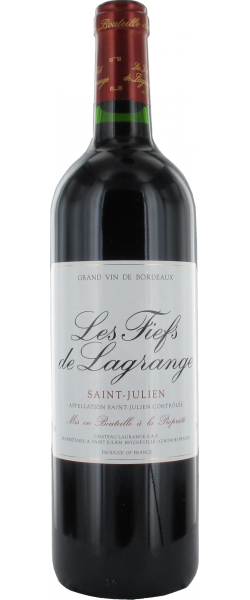
Les Fiefs de Lagrange
Overview: The second wine of the property was first produced in 1985 following the acquisition by Suntory group.
Average Age of the Vines: 30 years old
Soil: Gravel and clay
Vinification: Same methods as the Grand Vin, which produces a wine that is characterized by round tannins, aromas of red and black fruit in its youth, and good cellaring potential.
Grape Varieties: Cabernet Sauvignon, Merlot
Tasting Notes: Red in color with purple hues, a complex nose, with a rich mouth typical of this great vintage of Fiefs! Cherry, blackcurrant, licorice, and pepper aromas dominate the palate but also with a cool roundness that brings with it a certain elegance. A long finish.
Château Lalande
The Estate
Château Lalande is located in the municipality of Saint-Julien-Beychevelle, along the “road of wines” next to the estuary of the Gironde. The Grands Crus Château Talbot and Château Lagrange are its immediate neighbors. The owner is Jean-Paul Meffre, and the winemaking consultant is Christophe Ollivier.
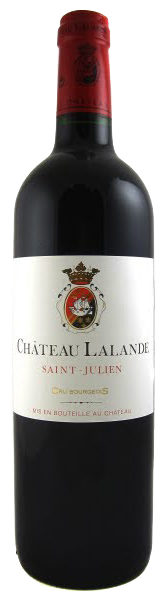
Château Lalande Saint-Julien
Production Area: 15.50 ha
Average Age of the Vines: 25 years old
Grape Varieties: 50% Cabernet Sauvignon, 50% Merlot (percentages vary depending on the vintage)
Soil: Gravel and sandy soil
Plant Density: 6,666 vines/ha
Pruning: Guyot double
Harvesting: Mechanical and manual
Average Yield: 40 hl/ha
Production: 74,000 bottles
Vinification: Temperature control, maceration in cool conditions, 3 weeks of vatting (concrete and stainless), traceability monitoring, malolactic fermentation in vat.
Aging: 12 months in barrels, % of new oak depending on the vintage, selection of cooperages.
Tasting Notes: Beautiful garnet color. The nose opens on chocolate, woody, and fruity notes. On the palate, the attack is supple and pleasant with velvety and suave tannins.
Alcohol: 14%
Château Lanessan
The Estate
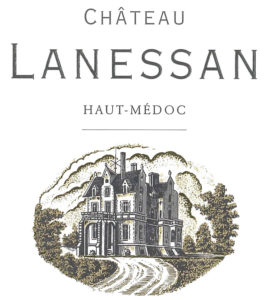
Established in 1793 by Jean Delbos, the vineyard initially spanned 24 hectares, much smaller than its current size. The Tudor-style chateau was constructed in 1878. Today, Chateau Lanessan is owned by the Bouteiller family, who are direct descendants of founder Jean Delbos. Most vineyards in the Médoc have changed ownership multiple times, so it is unusual for an estate to have been maintained by the same family for so long. Hubert de Bouard, owner of Chateau Angelus, was brought in as a consultant starting with the 2015 vintage in order to increase the quality of production. In addition to its vineyards, Lanessan also has several stables which were constructed in the shape of a horseshoe, and a museum of historical carriages.
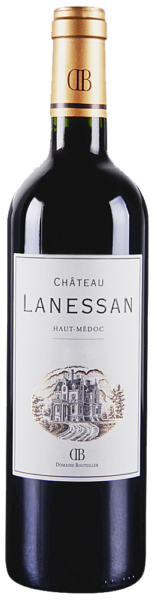
Château Lanessan Haut-Médoc
Production Area: 32 out of 80 hectares are planted with vines, the rest is reserved for forests, parkland, and horse trails.
Grape Varieties: Cabernet Sauvignon, Merlot, Petit Verdot (Percentages vary depending on the vintage)
Soil: Deep Garonne gravel
Average Age of the Vines: 30 years of age
Plant Density: 10,000 vines/hectare
Harvest: Mechanical harvest; sorting by hand.
Vinification: The wine is fermented in coated concrete tanks with temperature control. Malolactic fermentation takes place in tank.
Maturation: The wine is aged for about 12 months in a combination of 33% new, 33% 1-year old, and 33% 2-year old French oak barrels.
Annual Production: 18,000 cases
Tasting Notes: The bouquet is complex and elegant. Good structure on the palate, with fleshy tannins and a lingering finish.
Château Langoa Barton
The Estate
Thomas Barton had been trading since the 1600s with Bordeaux, which was an important trading port on the Atlantic coast. He eventually left his native Ireland to settle in Bordeaux. In 1725, he created a négociant company and in 20 years became an influential figure of the wine trade; his reputation far exceeded the French and even European borders. His grand-son Hugh succeeded him in 1786, at the age of 20, and strengthened the family trading business. With his energy and efficiency, Hugh Barton consolidated his fortune and decided to acquire vineyards in the Médoc region. Château Langoa, an elegant house built in 1758, is the archetype of the Bordeaux style of the 18th century. Its architecture and harmonious proportions charmed Hugh, who acquired it in 1821 and renamed it “Château Langoa Barton”. Afterwards, 3 generations succeeded at the head of the vineyard, but it is thanks to Ronald Barton’s accomplishments that the integrity of the vineyard withstood the difficult years of the interwar period. The current owner, Anthony Barton, was born in Ireland and later joined his uncle in France in 1951 to integrate the trading house and assist him in the direction of the property. Today, the partnership between Anthony and his daughter, Lilian Barton-Sartorius, strengthens and enhances the international reputation of Langoa Barton. Melanie Barton-Sartorius, oenologist and Anthony’s granddaughter, represents the 10th generation of Bartons in Bordeaux.
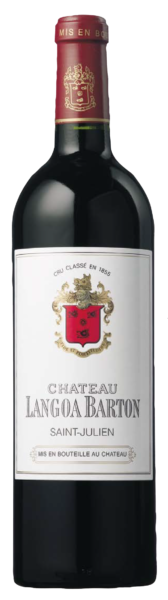
Château Langoa Barton Saint-Julien 3ème Grand Cru Classé
Classification: 3e Grand Cru Classé in 1855
Appellation: Saint Julien
Production Area: 17 hectares
Grape Varieties: 57% Cabernet Sauvignon, 34% Merlot, 9% Cabernet Franc
Soil: Deep gravel on clay subsoil
Average Age of the Vines: 35 years old
Plantation Density: 9,100 feet per ha
Average Yield: 42 hl per ha
Vines: Traditional ploughing, no weed killing, reasoned additives. Double cane pruning adapted to the vigor of the vines. Manual harpening, topping, and reasoned de-leafing.
Harvest: Manual, followed by successive sortings of the grapes. De-stemming, crushing, and fermenting plot by plot.
Vinification: Wooden vats room with thermo-regulation system. Alcoholic fermentation lasting 7 to 10 days with twice daily pumping over. Maceration about 3 weeks. Drawing off into the barrels lot by lot.
Aging: 16-18 months in French oak barrels in a cellar kept at a constant temperature of 15°C. 50-70% new wood according to vintages. Topping 3 times a week. Barrel to barrel racking. Fining in the barrels with fresh egg whites.
Annual Production: Approx. 80,000 bottles
Consulting Oenologist: Jacques and Eric Boissenot
Château Larrivaux
The Estate
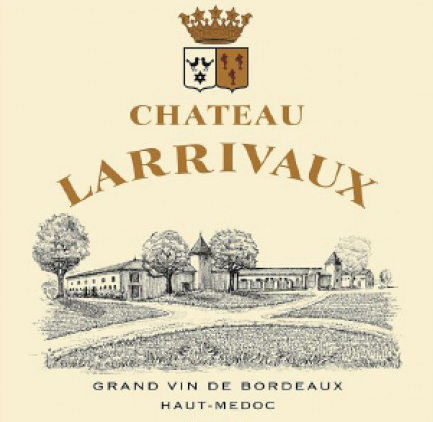
Château Larrivaux is one of the few estates in Médoc to have belonged to the same family for 3 centuries. Ownership of the estate has been passed down through the female line of the family from generation to generation. In total, Château Larrivaux is a 100-hectare (250-acres) estate that includes woodlands, meadows, and abandoned quarries. The vineyard is well-oriented, planted on gravelly hillsides, with very favorable soils that are of the same consistency and quality as those of the great growths in neighboring Pauillac and Saint-Estèphe. The Chateau is now managed by Bérengère Tesseron, who married Basile Tesseron, owner of Lafon Rochet (4th Cru Classé St Estèphe) in 2008.
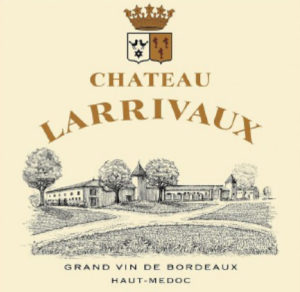
Château Larrivaux Haut-Médoc
Appellation: Haut-Médoc
Location: Cissac
Classification: Cru Bourgeois
Soil: Gravel, clay and chalk
Age of the Vineyard: 27 years
Size of the Vineyard: 18.6 ha
Grape Varieties: Merlot 61%, Cabernet Sauvignon 26%, Cabernet Franc 8%, Petit Verdot 5%
2014 Blend: Merlot 72%, Cabernet Sauvignon 17%, Cabernet Franc 7%, Petit Verdot 4%
Vinification: Grapes are mechanically harvested and destemmed. Wines are fermented for 21 days on the skins in stainless steel and cement tanks. Aging lasts 16 to 18 months in oak casks (30% new wood)
Tasting Notes: Deep ruby color, aromas of blackcurrant and licorice. Supple and well structured with elegant tannins. Well balanced and rich this wine offers a long finish. A powerful yet gentle wine. An ideal wine for the modern consumer who likes fresh tannins yet it can also age extremely well.
L'X de Larrivaux
Overview: This is the second wine of the estate. The name L’X de Larrivaux is simply the contraction of the first and last letter of the name Larrivaux.
Location: Cissac
Appellation: Haut Médoc
Soil: Gravel, clay, chalk
Vineyard Age: 27 years
2011 Production: 29,000 bottles
Grape Varietals: Merlot 61%, Cabernet Sauvignon 26%, Cabernet Franc 8%, Petit Verdot 5%
2011 Blend: Merlot 90%, Petit Verdot 7%, Cabernet Sauvignon 3%
Vinification: Grapes are mechanically harvested and de-stemmed. Wines are fermented for 21 days on the skins in stainless steel and cement tanks. Aging lasts 16 to 18 months in oak casks (30% new wood annually).
Production Area: 18 Hectares
Harvest Dates: September 2011
Tasting Notes: Deep ruby color, aromas of black current and licorice. Supple and well structured with elegant tannins. Well balanced and rich, this wine offers a long finish. A powerful yet gentle wine.
Oenologue: Eric Boissenot
Château Larrivet-Haut-Brion
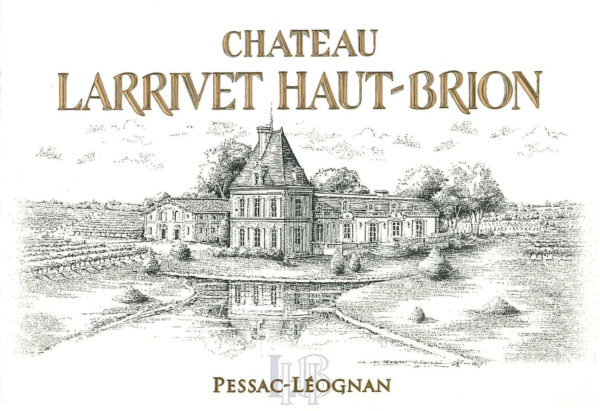
The Estate
Since 1840 –the year in which the Château was first mentioned among the first growths of Pessac-Léognan – till today, the fame of Château Larrivet Haut-Brion has continued growing. Called at various times Château de Canolle, La Rivette, and Château Brion-Larrivet, the estate was renamed Château Haut-Brion Larrivet by the owner Ernest Laurent (a Bordeaux négociant) in 1874.
In 1893, the estate was acquired by the Bordeaux ship owners, Les Fils de Théodor Conseil, who enlarged the vineyards to some 50 hectares.
Wine production was almost non-existent during the depression of the 1930s, at which time many vines were uprooted.
The property was given its current name, Château Larrivet Haut-Brion, in 1929 by Jacques Guillemaud (owner since 1941). Devoted and hard-working, he conscientiously managed the estate until 1982.
In 1987, Château Larrivet Haut-Brion was acquired by the Gervoson family, who set about recreating the grandeur of the Chateau. Currently, the Château is comprised of 17 hectares of vineyards, a wooded park of 13 hectares and other notable attributes, giving the Château an undisputed potential. In keeping with their dedication and attention to detail, Philippe and Christine Gervoson have succeeded in reestablishing the unity of the estate.
In just a few years, the area under vine has reached 72.5 hectares (11.5 hectares of white wine grapes and 61 of red) thanks to newly-planted plots and the purchase of neighboring vineyards. Assisted by a motivated and dedicated winemaking team, the owners continue to modernize infrastructures, reorganize the vineyards (based on a detailed soil survey), and make quality wines with a unique personality and characteristic elegance.
Availing the estate of his considerable expertise and ambitions, Bruno Lemoine took over his functions as Managing Director and Winemaker at Larrivet Haut-Brion in 2007. A respect for tradition and the important role played by women are part Château Larrivet Haut-Brion’s identity.
The team grew in 2009 to include Emilie Gervoson, one of the château owner’s three daughters, who represents a new epicurean generation anxious to be as professional as possible in all aspects of winemaking.
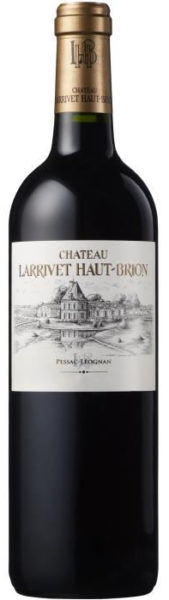
Château Larrivet-Haut-Brion Pessac-Leognan
Production Area: 75 hectares
Soil: Typical of the Graves de Bordeaux middle terrace. Very gravelly with a sand or clay matrix. Gravelly rises with excellent sun exposure and perfect drainage.
Grape Varieties: 50% Merlot, 45% Cabernet Sauvignon, and 5% Cabernet Franc
Average Age of the Vines: 25 years
Average Yield: 45 hectoliters/ha
Vine Density: 7,700 vines/ha
Harvest: The grapes are handpicked into small crates.
Vinification: One third in new French oak barrels and two thirds in barrels previously used to age one or two vintages for 14 to 18 months, depending on the year.
Aging: 10-11 months with regular bâtonnage (lees stirring with a stick)
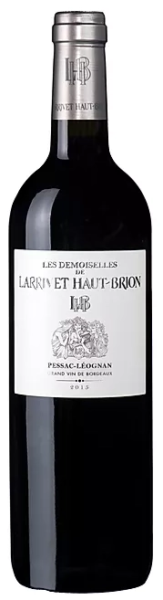
Les Demoiselles de Larrivet Haut-Brion Pessac-Léognan
Overview: Les Demoiselles de Larrivet Haut-Brion is the second wine of Château Larrivet-Haut-Brion. This wine is produced from an organoleptic selection favoring the roundness and fruitiness of the wine.
Production Area: 61 hectares
Soil: Deep gravel and sand overlying a clay substratum.
Average Age of the Vines: 30 years old
Grape Varieties: Merlot, Cabernet Sauvignon
Vinification: In small, temperature-controlled concrete vats using gravity-flow for filling. Regular punching down of the cap of skins, and long macerations (4 to 5 weeks).
Aging: Air-conditioned cellar. Aging in second fill French oak barrels, oak casks, and terracotta amphorae for 14 months.
Tasting Notes: Dark garnet color. The nose is fragrant with well-ripened black fruit and a light toasted note. Round and fruity on the palate, this wine is fleshy with a well-balanced woodiness.
Château Latour (Biodynamic)
The Estate:
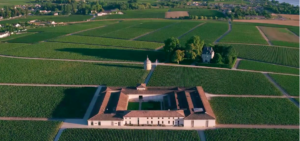
Château Latour is located in the heart of the Médoc wine region, about 50 km northwest of Bordeaux, where the legend of the vineyards of Bordeaux began. The oldest document mentioning Latour dates back to 1331. Château Latour then appears in Jean Froissart’s “Chronicles” in 1378. This was the time of the Hundred Years War and the Tour de Saint Maubert was a fortress to guard the estuary, manned by Breton soldiers for the King of France.
The Terroir:
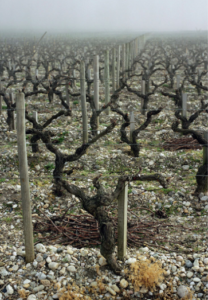
The château’s prime terroir, l’Enclos, overlooks the Gironde estuary. It is the river and the ocean that, over the centuries, have given the vineyard its geological complexity and ensure a milder climate. Most of Château Latour’s vines are planted on gravelly hilltops that stand 12 to 16 meters above the Gironde estuary. The fortunate combination of the Gironde, with layers of gravel on the surface and a clay subsoil, gives Château Latour’s terroir advantages that few other vineyards can claim.
There are two factors that have a benign influence:
• The proximity of the Atlantic, bringing the generosity of an oceanic climate.
• The immediate proximity of a large mass of water in the form of the estuary, protecting against possible cold spells early in the growth cycle and also enabling earlier ripening of the grapes, which can be an important factor as the harvests approach.
Acreage: 92 hectares
Age of the Vines: 60 years old for the Grand Vin
Grapes Varieties: 76% Cabernet Sauvignon, 22% Merlot, 2% Cabernet Franc & Petit Verdot
Harvest: Manual
Cultivation:
Nearly seventy people currently work at Château Latour. This 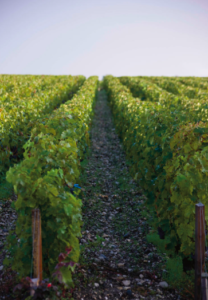 is higher than the average figure per hectare for estates in the Médoc and is justified by the extremely meticulous care that is taken in the vineyard and during the maturing process. Many employees, who follow in the footsteps of their parents or grandparents, have been working with pride and devotion for many years at the property, enabling the enrichment and passing on of their precious knowledge.
Pruning, attachment to trellis wires, ploughing, trimming of excess foliage and green harvests are all crucial for optimum growth and the selection of the best grapes.
The preservation of this magnificent heritage also involves the replacement of dead or accidentally damaged vines by new, younger vines. This technique, known as “complantation”, accounts for about 3% of the vines every year. It helps to maintain the potential quality and yields of the plots.
In 2009, Château Latour’s teams began a review of the vine growing methods in place that has led, over the years, to profound changes in practices in the vineyard and the ways that the vines are protected. This has involved a reintegration into their practices of an understanding and respect for the balance between the vines, the soil and the environment, with a view to achieving an optimal expression of the terroir in the wines.
Since August 2015, the entire Château Latour vineyard has been managed according to the principles of organic farming.
Vinification:
The vat room was fully renovated in 2001. It now consists of more than 80 stainless steel vats of various sizes (from 164 hl to 12 hl) enabling grapes with the same profile to be vinified together and for all the experiments to be carried out with the precision necessary for a better understanding of the subtleties of the terroir. The young wine remains in temperature-controlled vats for about three weeks: enough time to extract all the flavors and potential treasures contained in the grapes.
Fermentation:
After running-off, in which the wine is separated from the solids or marc (essentially all the grape skins and seeds) and transferred into clean vats or barrels, the malolactic fermentation takes place during the following month. During this stage, the wine softens, developing roundness and precision. Meanwhile, the marc is pressed and the resulting press wine is matured separately in barrels, pending the blending stage. Once malolactic fermentation has been completed (between the end of November and January), the wine can then be transferred to barrels to start the maturing process.
Maturation:
The wine is aged uniquely in French oak barrels from the forests of central France. The barrels are renewed every year for the Grand Vin. The wine stays in the barrel cellar for the first year until the beginning of the summer following the harvest. During the early months, rather than being hermetically sealed, the barrels are loosely stopped with a glass bung to facilitate a very slow exchange of gases between the wine and the atmosphere. The level of the wine in the barrel gradually goes down due to absorption by the wood and evaporation; the barrels are topped up twice a week in an operation called ouillage.
A year after it has been put in barrels, the wine is clarified using egg white, with one to six egg whites per barrel, depending on the wine and the vintage. This very old technique enables any particles still in suspension in the wine to be drawn down to the bottom of the barrel and removed. A final racking about 45 days after this fining separates the bright, clear wine from the lees.
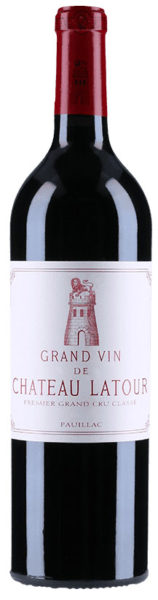
Grand Vin de Chateau Latour Pauillac 1er Grand Cru Classé
Overview: Château Latour’s Grand Vin is made exclusively from “vieilles vignes”, an average of 60 years-old, in the Enclos. Gravettes, Sarmentier, Pièce de Château… these are the names of some of the finest plots that express the character of the terroir and forge the wine’s identity every year.
Terroir: The heart of the Enclos is the only terroir that, every year, can produce the depth, elegance and concentration that we expect of the Grand Vin. It is here that the Cabernet Sauvignon (accounting for more than 90% of the blend) can achieve optimal expression in terms of color, richness, and freshness. These wines need time – often a decade- before they begin to be ready for drinking.
Grape Varieties: Cabernet Sauvignon, Merlot, Petit Verdot
Tasting Notes: In great vintages, the power and energy of Château Latour’s wines enables them to continue to develop for several decades with ease. The bouquet and impressions on tasting gradually evolve, becoming increasingly complex, ultimately reaching a peak, after which the tannins soften and then the wine slowly declines. Beyond the pleasure of drinking them, these wines can produce powerful feelings and unforgettable moments. Château Latour is also known for having the ability to produce fine wines even in difficult years.
Cellaring Potential: In great vintages, the power and energy of Château Latour’s wines enables them to continue to develop for several decades with ease.
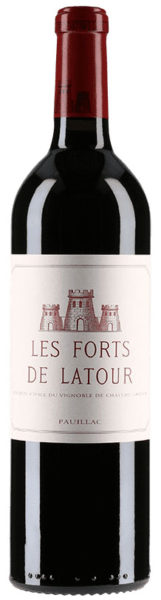
Les Forts de Latour
Origins: Les Forts de Latour takes its name from an historic plot in the Enclos. The wine was first labelled with this name in 1966 and constant work on developing its quality has resulted in its achieving the level of a Médoc Grand Cru Classé.
Terroir: This wine is produced from vines planted in the following locations: at the edge of the Enclos; some plots that could be used in the Grand Vin may finally be included in the Forts de Latour blend, depending on how their quality is judged during the blending tastings; plots located outside the Enclos, in Cru Classé areas of Pauillac (These consist on the one hand, of plots such as Piñada, Petit Batailley and St. Anne, which have belonged to the estate for more than a century and whose vines benefit from a high average age (around 40 years), synonymous with quality. And on the other hand, of a seven hectare island of vines in the commune of Artigues on gravel terraces, which was acquired in 2005. Plus a handful of plots (about 5 hectares) acquired in 2012.)
These various blocks of plots present very different terroirs, thereby offering Forts de Latour more varied characteristics and flavor profiles depending on the vintage.
Grape Varieties: Cabernet Sauvignon, Merlot, Petit Verdot
Style: Les Forts de Latour is produced with the same meticulous care as the Grand Vin, both in the vineyard and in the winery. The only notable difference, apart from the origin of the grapes, is the proportion of new barrels (50 to 60%) used in the maturing stage. The blend for Forts de Latour can vary from one year to the next but there is always a higher proportion of Merlot (25 to 30%) compared to the Grand Vin.
Château Le Prieuré (Certified Organic / Biodynamic)
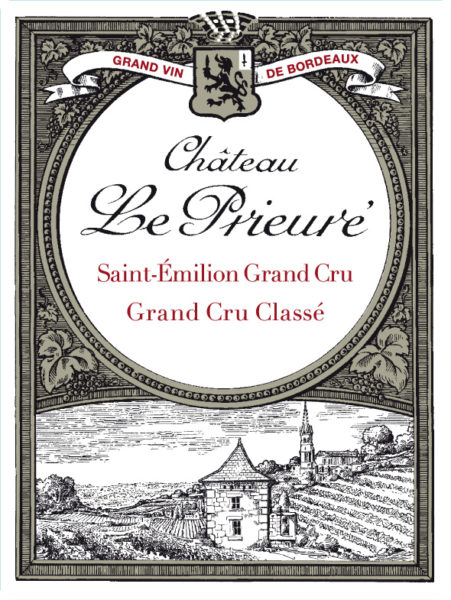
The Estate
Formerly called Premieur Cru des Cordeliers, renamed in 1897, Château Le Prieuré has been part of the elite, the Grands Crus Classés, since the beginning of the classification system in 1955. 6,24 hectares on limestone plateau and south facing slopes overlooking the city of Saint-Emilion.
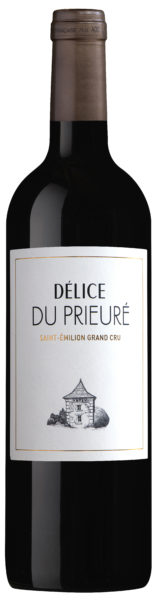
Délice du Prieuré Saint-Émilion Grand Cru
Appellation: Saint-Emilion Grand Cru
Technical Director: Pénélope Godefroy
Consulting Oenologue: Jean-Claude Berrouet
Location: Situated on a limestone plateau and hillsides facing south between Trottevieille, Troplong Mondot, Pavie-Macquin, to the east of the village of Saint-Emilion
Soil: Clay-limestone soil on a base of clay and limestone from Castillon
Production Area: 6.24 ha
Plant Density: 6,300 plants / ha
Grape Varieties: 80% Merlot, 20% Cabernet Franc
Average Age of the Vines: 30 years old
Viticulture: Tillage using animal traction only. Certified Organic Ecocert (2018 first vintage certified). Biodynamic practices employed.
Harvest: Manually done only in small crates. Sorted in the vineyard and upon entry to the cellar.
Vinification: Vinification of the plot selections in thermoregulated, concrete vats with gentle extraction. Malolactic fermentation in barrels.
Aging: 11-13 months in barrel. It is in the privacy of a small cellar sheltered from the quarries that the wine of Château Le Prieuré flourishes.
Tasting Notes: The bouquet offers delicate aromas of licorice and black fruits. The mouth feel is creamy and balanced, with a complex and lingering finish. It leaves a subtle floral imprint on the palate, voluptuous, elegant, and fresh. This wine is the perfect reflection of the limestone terroir.
Château Léoville-Las-Cases
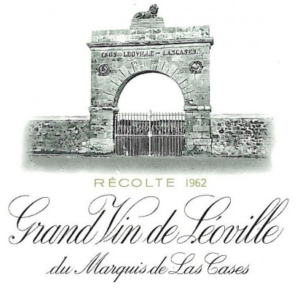
History:
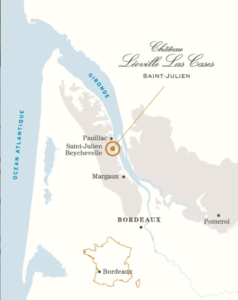
One of the oldest Medoc estates, Domaine de Léoville belonged to some of the wealthiest and most influential noble French families before it was acquired by the Las Cases family. The estate was split up between 1826 and 1840 as a result of the French Revolution (Expropriation of emigrants’ property and constitution of egalitarian redistribution). Château Léoville Las Cases was created, thanks to a kind of birthright, from 3/5 of the original estate and the heart of the domain.
The Grand Vin’s current terroir has therefore been at the historic heart of the original terroir since the 17th century. Pierre Jean, Adolphe, and Gabriel de Las Cases were successive heirs to the property until 1900, when Théophile Skawinski purchased a share in the estate and became its manager. Léoville Las Cases has now been managed by the same family since the late 19th century and is today represented by Jean-Hubert Delon, sole owner of the Château and proprietor of Château Potensac in the Medoc and Château Nénin in Pomerol.
Terroir:
The Clos encases a terroir of very great complexity. It is mainly composed of Quaternary gravel (“graves”) over gravelly sand and gravelly clay subsoils. We also find clays which are variably deep and compact, but which sometimes break through to the surface. The proximity of the Gironde River has created the wide diversity of soils, formed over various geological periods by successive superimpositions.
The river also creates a special microclimate that enables very early ripening of the grapes and protects the vineyards from frost. This cameo of geological combinations influences the growth of the vine and the composition of the grapes: regular but restricted water supply and a very low intake of nutrients bring out the best in the great Cabernet Sauvignons and Cabernet Francs which usually achieve their full potential whatever the vintage. The incomparable terroir gives this great wine its unique personality.
THE VINEYARD CHARACTERISTICS 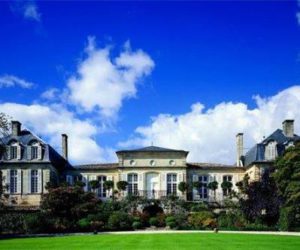
AOC: Saint-Julien
Surface Area: 98 hectares
Average Age of the Vines: 40 years old
Grape Varieties: Cabernet Sauvignon 66% / Merlot 24% / Cabernet Franc 9% / Petit Verdot 1%
Vine Density: 8,600 plants/hectare
The largest plot of Léoville-Las Cases’ vineyards, known as the Grand Clos, is located on the northern boundary of St-Julien, with only the Juillac tributary separating its vineyards from those of Château Latour in Pauillac.
The vineyard area in total extends 97 hectares (240 acres) planted with a grape variety distribution of 65% Cabernet Sauvignon, 19% Merlot, 13% Cabernet Franc and 3% Petit Verdot. The vineyard underwent major replanting during the 1950s, and today the average age of the vines is 30 years old.
Léoville-Las Cases produces two wines – its Grand Vin, and a second wine called Clos du Marquis that has been in production since 1902.
The grapes are harvested by hand, crushed, and then fermented in temperature-controlled wood, concrete, or stainless steel vats of varying size depending on the style of the vintage. Léoville-Las Cases also employs a state of the art reverse-osmosis machine to help extract excess water from the grape must in a rainy vintage. Use of this machine is considered legal, but highly controversial. While Léoville-Las Cases is not the only estate to employ this technique, few estates admit to its use. After processing and fermentation, the wine is transferred into oak barrels for 18–20 months of aging before being fined with egg whites and bottled.
The average annual production is 180,000 to 200,000 bottles for the Grand Vin, and 250,000 to 270,000 bottles for the second wine, Clos du Marquis.
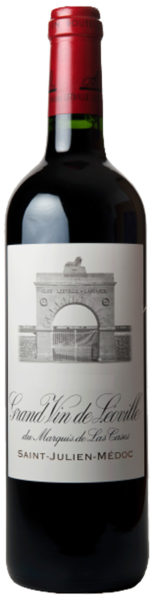
Château Léoville-Las Cases Saint-Julien
Overview: The Grand Vin is the product of exceptional terroirs from the former Léoville estate. These terroirs are located mainly in the Clos Léoville Las Cases, which you pass as you leave Saint- Julien village for Pauillac. They extend over nearly 60ha producing Cabernet Sauvignons and Cabernet Francs with a complex, polished expression and characteristics which are totally unique to the Grand Vin of Léoville du Marquis de Las Cases and have been widely recognized for years.
Terroir: Mainly composed of Quaternary gravel (“graves”) over gravelly sand and gravelly clay subsoils. The proximity of the Gironde River has created the wide diversity of soils, formed over various geological periods by successive superimpositions. The river also creates a special microclimate that enables very early ripening of the grapes and protects the vineyards from frost.
AOC: Saint-Julien
Surface Area: 55 ha
Average Age of the Vines: 52 years
Grape Blend: Cabernet Sauvignon, Merlot, Cabernet Franc
Plantation Density: 8,600 plants/ha
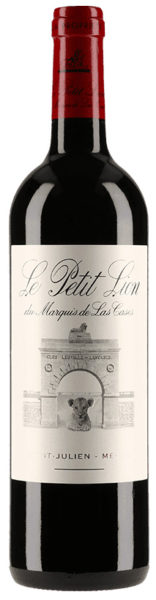
Le Petit Lion du Marquis de Las Cases
Overview: In recent years, several vineyards in Léoville-Las Cases were uprooted and replanted, and these are now coming into production. To preserve the quality level of the Grand Vin, the winemakers decided to create a second wine, beginning with the 2007 vintage. The Petit Lion shares the philosophy of its two elder siblings; it is vinified and aged in order to preserve its fresh, ripe fruit flavor throughout its life. However, it is designed as a second wine, and is therefore made to be more accessible and for earlier drinking, with a significant proportion of Merlot used in the blend.
Grape Blend: Cabernet Sauvignon, Merlot, Cabernet Franc, Petit Verdot
Tasting Notes: Very ripe, luscious, full-bodied red with expressive flavours – ripe blackberries, hint of dark chocolate, plums. Highly ambitious wine that will require some bottle age to tame the dense tannins, which currently overpower the fruit.
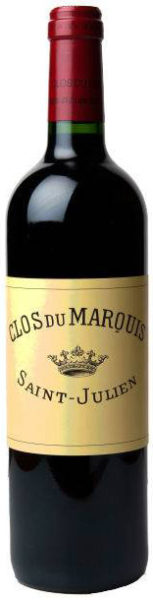
Clos du Marquis
Overview: The name of this wine, created at the beginning of the 20th century when the vineyard was planted, was inspired by the Petit Clos adjacent to the Château de Léoville, residence of the Marquis de Las Cases. Clos du Marquis is a historical brand by the Domaines Delon, a separate vineyard to Leoville Las Cases whose first vintage was released in 1902.
The creation of this brand was to allow a clear identification of two completely distinct terroirs. The situation remains unchanged today as the vineyard producing the Clos du Marquis is located on top terroirs of the Saint Julien appellation, surrounded by such prestigious Classified Growths as Léoville Poyferré and Léoville Barton.
Terroir: The Clos du Marquis vineyard is 500 meters west of the famous walled enclosure of Léoville Las Cases known as the ‘Enclos’. It is made up of quaternary gravel that is older and finer than the Enclos gravel. The presence of organic matter in the top soil, due to the presence of a forest on this land in the past, brings a typical Saint-Julien style to the Clos du Marquis. The grapes ripen later in this vineyard than in the Enclos, the latter being warmed by the micro-climate of the nearby Gironde river. The vineyard, planted on the Saint-Julien plateau, 20 meters above sea level, is composed of humic podzol over sandy-clay gravel. The Clos du Marquis terroir is characterized by a greater regularity in the soil types as well as a higher hydrological sensitivity than the Enclos.
AOC: Saint-Julien
Surface Area: 45 hectares (111 acres)
Average Age of the Vines: 35 years
Grape Blend: Cabernet Sauvignon, Merlot, Cabernet Franc
Plantation Density: 8,700 plants / hectare
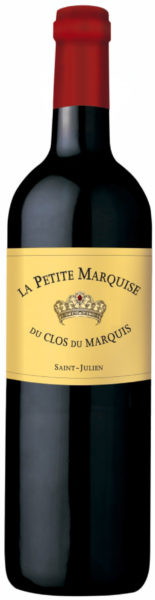
La Petite Marquise du Clos du Marquis
Overview: As the younger vines came into production on the Clos du Marquis vineyard and with the aim of preserving its unanimously recognized quality, the winemakers decided to create a second wine. La Petite Marquise is an affectionate nickname given by the Marquis de Las Cases to his little daughter, and adopted by Mr. Delon for his own daughter. La Petite Marquise is, above all, a tribute to all the women who have brought their feminine touch to the history of the estate over the centuries.
Grape Varieties: Cabernet Sauvignon, Merlot
Tasting Notes: Produced from grapes grown on the superb Clos du Marquis terroir, La Petite Marquise shows great subtlety and refinement. With its harmonious expression and delicate tannic structure, this wine is elegantly seductive and enchanting. To be enjoyed relatively young due to the high percentage of Merlot in the blend.