


Château Les Grands Chênes
The Estate
Today a rising star of the Médoc, Château Les Grands Chênes (under the umbrella of Bernard Magrez properties) is sought-after by wine enthusiasts. The outstanding quality of its wine has won the plaudits of all the fine wine connoisseurs over more than twenty years. It is called an “Assimilé Grand Cru” wine, which is a term used to designate wines which, although not classified, are considered equivalent in terms of quality and expression of terroir. Château Les Grands Chênes has continued to gain awards and win medals at the leading national and international wine challenges and to earn the recognition of the most prestigious wine guides.
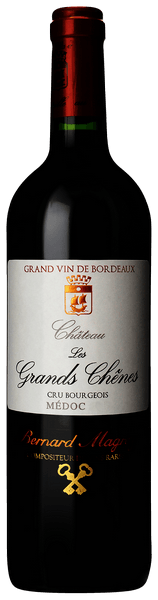
Médoc Cru Bourgeois
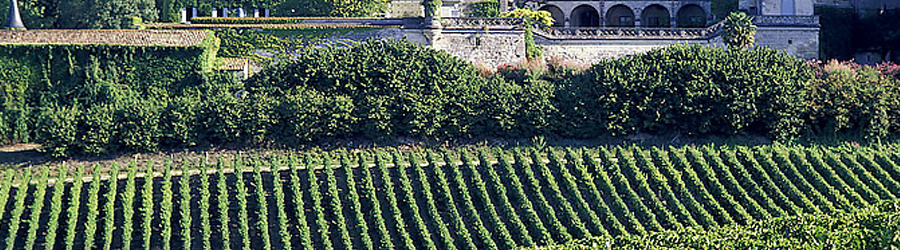
Location: Saint-Christoly Médoc, a town once famous for its port with the sound of barrels rolling onto the quayside, is where the vineyards of Château Les Grands Chênes are located. Ideally planted on a beautiful hillside of Garonne gravel, it makes the most of this top-quality terroir.
Appellation: Médoc
Soil: Garonne gravel
Average Age of the Vines: 41 years old
Vine Density: 7,500 vines/hectare
Vinification: Transferred to small-sized temperature-controlled stainless steel vats. Average maceration time is 28-30 days.
Aging: Approximately 16 months.
Grape Varieties: Merlot, Cabernet Sauvignon
Tasting Notes: Deep garnet color, with hints of mahogany and biscuit that come with age. The nose is complex, with notes of blackcurrant and plum, followed by secondary aromas like cinnamon and charred wood. Well-rounded, perfectly balanced tannins. Roasted notes and ripe fruit on the palate. Balanced, full-bodied finish.
Château Lilian Ladouys (Organic)
The Estate
Established in the 18th century and family owned for generations, Chateau Lillian Ladouys was bought in recent years by a private investor who has invested heavily in both the vineyards and the winery. The modernisation has hugely benefitted the resulting wines and Lillian Ladouys is certainly one to watch – if the 2003 and 2005 vintages are anything to go by! Hearty, concentrated, and with fine tannin structure, the new wave of wines coming from this Chateau are fantastic examples of Saint-Estèphe claret.
The estate covers an area of 47 hectares spread in a slightly disparate fashion across the St Estèphe appellation, within sight of some prestigious neighbors such as Cos d’Estournel.
Château Lilian Ladouys embarked on an official conversion to organic farming in 2020. In 2024, they produced their first organically grown vintage.
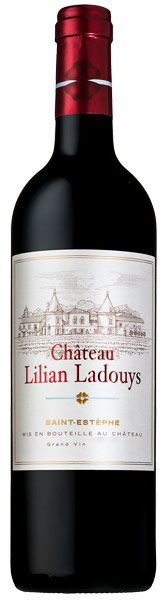
Château Lilian Ladouys Saint-Estèphe
Grape Varieties: 60% Cabernet Sauvignon, 35% Merlot and 5% Cabernet Franc (slight increase in Cabernet Sauvignon in recent years)
Average Age of the Vines: 40 years old
Soil: About 2/3 of the vineyard is situated on well drained soils rich in coarse gravel, with pebbles up to 8 cm across. The remaining vineyards are clay over a limestone bedrock.
Vinification: At harvest time, the fruit is sorted in the vineyard and on arrival at the chai, before fermentation by indigenous yeasts in temperature-controlled stainless-steel vats, regulated to 31-33ºC.
Aging: The young wine goes into oak barrels, of which 1/3 are new with each vintage, where malolactic occurs. The wine will remain here 16-18 months before an egg-white fining, filtration, and bottling.
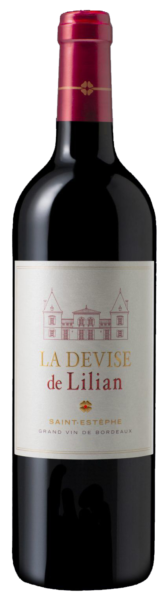
La Devise de Lilian Saint-Estèphe
Overview: La Devise de Lilian has become a benchmark among second wines. Its flavorful style and its well-integrated tannins have won the hearts of those who love softness and richness. La Devise does not use strict plot definition, but is instead a true second wine, a genuine signature blend with Cabernet Sauvignon and Merlot at the forefront.
Grape Varieties: Cabernet Sauvignon, Merlot
Aging: La Devise is matured for an average of 12 months and is accessible in its youthful prime.
Tasting Notes: Fruity with a velvety structure, it pairs wonderfully with fresh cuisine such as white meat or fruity desserts.
Château Lynch-Bages
The Estate
The history of Lynch-Bages, situated in the lands of “Batges” at the entrance to Pauillac, is emblematic of the Médoc region. Although there are records of the Bages territory as far back as the 16th century, the history of wine production in the area really began in the 18th century. From 1749 to 1824, the vineyard was owned by Thomas Lynch, the son of an Irishman from Galway who worked as a merchant in Bordeaux. Thomas Lynch managed the land wisely and produced high quality wines under the name of ”Cru de Lynch”. As part of the prestigious 1855 Classification, for the Exposition Universelle de Paris, his wine would soon be classified as one of the fifth growths.
Later on, Jean ”Lou Janou” Cazes, a ”Montagnol” (a term used to describe farmers from the austere upper valleys of Ariège), came to the Médoc to earn a living. In the 1930’s, General Félix de Vial, a descendant of the Cayrou family, leased the vineyard to Jean-Charles Cazes, the son of ”Lou Janou” and a farmer at Château Ormes de Pez in Saint-Estèphe. Cazes went on to purchase both properties in the wake of World War II. Lynch-Bages has been run by the Cazes family ever since.
Lynch-Bages’ old vat-house represents a rare example of traditional winemaking equipment the Médoc area. Its slatted flooring which introduced the advantages of gravitational design now used in modern vat-houses, was invented by Skawinski in 1850. Back then, grapes were transported in a cart pulled by horses and then lifted by crane and emptied into a wooden tank on wheels and tracks. One or two winemakers inside the tank then crushed the grapes, making the juice flow out through openings into vats on either side. A rope-pulley-bucket system and no less than six workers were then required to remove the leftover grape skins from the fermentation vat.
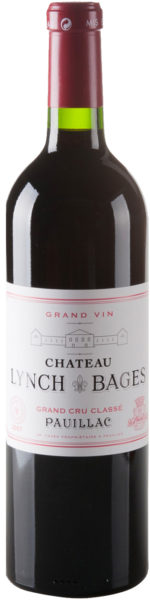
Château Lynch-Bages Pauillac 5ème Grand Cru Classé
Appellation: Pauillac
Classification: Grand Cru Classé
Owner: Jean-Michel Cazes
Production Area: 90 hectares
Terroir: Garonne Gravel
Harvest: Hand-picked and sorted at the vineyard
Aging: French oak barrels for 15 months (70% new wood)
Grape Varieties: Cabernet Sauvignon, Merlot, Cabernet Franc, Petit Verdot
Tasting Notes: Exhibits wonderful dark cherry and leather notes. Medium bodied with well-integrated tannins and a nice earthy spice on the finish.
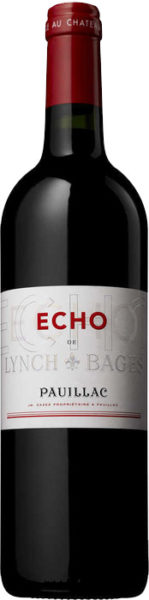
Echo de Lynch Bages
Overview: Château Haut-Bages Averous was the name of the former Pauillac estate acquired by André Cazes and was the domaine’s second wine from 1976 onwards. It was renamed Echo de Lynch-Bages as of the 2008 vintage in order to affirm its relationship with the Grand Cru Classé. Its name Echo refers to the nymph from Greek mythology who was deprived of speech by Hera as a punishment for distracting her when Zeus wished to consort with beautiful mortals. As such, although Echo de Lynch-Bages is not the first to speak, it shares the first wine’s elegance and character.
AOC: Pauillac
Production Area: 90 hectares
Soil: Garonne Gravel
Harvest: Hand-picked and sorted at the vineyard
Aging: French oak barrels during 12 months, in barrels used for one previous vintage.
Grape Varieties: Cabernet Sauvignon, Merlot
Tasting Notes: Like its big brother, Echo de Lynch-Bages displays the characteristic taste, aromas and length of Pauillac wines. As an echo of the first wine, it receives the same care and attention from the vine to the cellars. It is the result of a selection of Lynch-Bages’ youngest vines and specific plots which represent between 25 to 40 % of the harvest depending on the vintage. Echo de Lynch-Bages is round, soft and seductive in its youth with outstanding potential for bottle age.
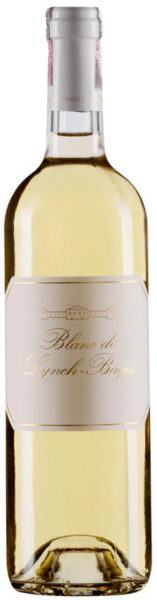
Blanc de Lynch Bages
Overview: Born in 1990, Lynch-Bages White is made from a blend of the Bordeaux appellation’s 3 traditional white grape varieties, planted on 8 of the Pauillac estate’s parcels. Increased precision in the selection process since 2006 as well as preventing oxidation to the fruit before pressing contribute to the harmonious aging of the wine.
AOC: Bordeaux
Production Area: 5.5 hectares
Soil: Garonne Gravel
Harvest: Hand-picked and sorted at the vineyard
Aging: Regular stirring of the lees on oak barrels for 6 months (50% new oak)
Grape Varieties: Sauvignon Blanc, Sémillon, Muscadelle (percentages vary depending on the vintage)
Tasting Notes: A fresh blend of the three traditional grape varieties. Aromas of fresh and exotic fruits from Sauvignon Blanc, dried and candied fruits and white flowers from Sémillon and delicate woody and vanilla notes from Muscadelle come together to make this complex Lynch-Bages White. The palate balances freshness and strength with a round, ample yet elegant structure. Characteristic of fine Bordeaux whites, Lynch-Bages White is lively and explosive in its early youth and retains impressive length on the palate for the duration of its life.
Château Lynch-Moussas
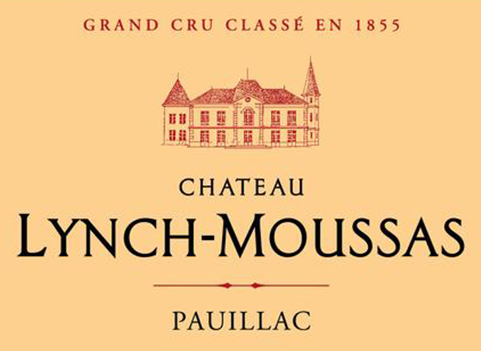
The Estate
The history of the Château dates back to 1610 when Domaine de Moussas-Bages belonged to the family of Jehan, wine merchant and owner of several estates. In 1728, Domaine de Moussas-Bages was bought by the Drouillard family. In 1748, Thomas Lynch inherited the estate from his wife, Elisabeth Drouillard, and renamed it Chateau Lynch. In 1779, Jean-Baptiste Lynch, Mayor of the city of Bordeaux in 1808, Earl of the Empire in 1811, then Peer of France in 1815, inherited the Château and entrusted its management to his brother, Michel Lynch, Chevalier and Mayor of Pauillac. When Jean-Baptiste Lynch died in 1835, Château Lynch was divided into two properties: Lynch-Moussas (Moussas being located on the locality called Moussas) and Lynch-Bages (located on the place called Bages).
In 1847, Château Lynch-Moussas was bought by a family of Spanish wine merchants, the Vasquez family. In 1855, the Chateau became 5th Grand Cru Classé of the Médoc.
In 1919, Jean Castéja, owner of Château Duhart-Milon, 4th Grand Cru Classé in Pauillac, Pichon-Longueville Baron, 2nd Grand Cru Classé in Pauillac, and Doisy-Védrines, 2nd Grand Cru Classé of Sauternes and Barsac, bought Château Lynch-Moussas. At that time, the property spanned more than 250 hectares, including 120 hectares of vineyards, forest, and pasture. At the end of the 1960s, the sons of Jean Castéja, Pierre, Émile, Jean, and Édouard Castéja decided to share family assets.
In 1970, Emile Castéja, married to Denise Borie and father of Chantal Preben Hansen and Philippe Castéja, took the reins of the Château. From a property whose surface vineyards had reduced to less than 10 hectares, Emile Castéja replanted the entire vineyard to reach 60 hectares. He modernized the Château to restore its luster, then the cellar to have a better winemaking facility. After this renovation, the Château was again recognized for the quality of its wine.
In the 2000s, Philippe Castéja took over and intensified the changes and modernizations with the arrival of Denis Dubourdieu and his team. It was during the 2001 vintage that Émile and Philippe Castéja launched the second wine of Château Lynch-Moussas, Les Hauts de Lynch-Moussas, from the younger plots. On June 21, 2019, it will be 100 years since the Castéja family owned and managed Château Lynch-Moussas.
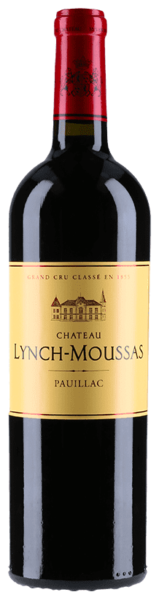
Château Lynch-Moussas Pauillac 5ème Grand Cru Classé
Location: The vineyards of Lynch-Moussas are situated in Pauillac, contiguous to a number of other Grands Crus Classés including parcels belonging to Castles Latour, Lynch-Bages, Pichon-Longueville Baron, Grand-Puy-Lacoste and of course Batailley, which shows the quality of the soils and its production.
Grape Varieties: 75% Cabernet Sauvignon, 25% Merlot (percentages vary depending on the vintage)
Production Area: 62 hectares
Soil: Gravelly Günzian soil composed of pebbles and gravel cemented by clay sands.
Average Age of Vines: 35 years
Annual Production: 220,000 bottles per year
Harvest: Manually done. The final sorting takes place on the sorting table; this way, only the very best grapes arrive in the vat.
Vinification: Fermentation in temperature-controlled stainless steel vats, with subsequent malolactic fermentation in the same vessel.
Aging: 14-18 months in oak barrels (50% new wood). The wines are fined with egg whites but not filtered before bottling.
Tasting Notes: The wines of Lynch-Moussas are today well known for their deep and dark color, their red-fruity nose. They are round with ripe tannins, followed by the typical hints of blackcurrant of the prestigious wines of Pauillac. These full-bodied wines have a significant length on the finish.
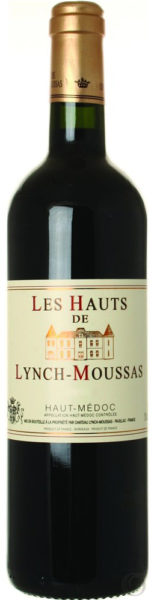
Les Hauts de Lynch-Moussas Haut-Médoc
Overview: Since 2001, the team of Chateau Lynch-Moussas has cultivated a plot located on the hill overlooking the Chateau to the south. This parcel, located in the Haut-Médoc appellation, is made up mostly of young vines and mainly planted with Cabernet Sauvignon. It is used to produce the 2nd wine of the Chateau, Les Hauts de Lynch-Moussas. This parcel is worked in the same way as the entire vineyard located in the Pauillac appellation.
Soil: Gravel and sand
Average Age of the Vines: 25 years old
Grape Varieties: 75% Cabernet Sauvignon, 25% Merlot (percentages vary depending on the vintage)
Vinification: Light and short pumping over. Alcoholic fermentation from 24-26 ° in the juice, then increase to 31° for maceration. Maceration lasts an average of 4 weeks.
Yield: 44 hL
Tasting Notes: An intense ruby color, fruity and roasted nose, with round and fine tannins, and a lingering finish. Assembled with parcels of Haut-Médoc and Pauillac declassed, this wine is a very typical Pauillac. Elegant and structured, it offers a very expressive aromatic palette with notes of raspberries, cherries, and coffee after a little aging.
Château Lynsolence
The Estate
This estate has been family owned since it was first created at the end of the 19th century. Pierre-Henri Descrambe, grandfather of the current owner Denis Barraud, enlarged the estate and passed the property and his love of the vine on to his grandson. Denis has been in charge since 1971.
Denis’ philosophy is that you can only make good wine if you have meticulously looked after the vines so that they give you good grapes. He takes great pains over the viticultural methods to obtain perfectly ripe grapes. He then vinifies in such a way as to let these ripe healthy grapes express themselves and in so doing, perfectly reflect the wonderful terroir.
Since 1998 the cuvée Lynsolence, named by Denis’ daughter Sandra who also designed the label, is the perfect example of the depth and finesse that he seeks in all the wines of Vignobles Denis Barraud.
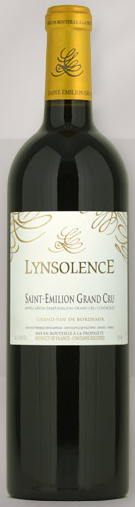
Château Lynsolence Saint-Émilion
Appellation: Saint-Emilion Grand Cru
Production Area: 2.5 Ha (6 acres) in the commune of St. Sulpice de Faleyrens at “Le Bert”. These parcels have an excellent microclimate and are next door to such famous estates as Mr. Perse’s Chateau Monbousquet and Mr. Thunevin’s Chateau Valandraud.
Soil: Very gravelly sand, deep gravels, cool ferriferous sub-soil.
Average Age of the Vines: 45-50 years old. These are the oldest vines owned by Denis Barraud.
Grape Varieties: 100% Merlot
Planting Density: 5,600 plants/ha, low yielding grafting stock.
Average Yield: 19-25 hl/ha
Harvest: Manual harvesting with rigorous selection on tables.
Viticulture: All the rows of vines are grassed. Throughout the growing season, Barraud controls this grass with a mower which cuts right under the vines. Deleafing and green harvesting in June and August, manual removal of spurs, soil improvement using organic materials exclusively.
Vinification: The bunches are destalked and then gently crushed in a destalking/crushing machine. Using a gentle Archimedes’ Screw, the harvest is transferred to two wooden vats of 50 Hl each. This type of pump had the advantage of neither mashing nor harming the grapes. The wooden vats are thermostatically temperature controlled. They are only used for maceration and fermentation. Before fermentation takes place, the harvest undergoes cold (10°C 50°F) maceration for 9 or 10 days. Alcoholic fermentation lasts 8 to 10 days. The post fermentation maceration takes place at 30°C, (77°F) for 20 to 25 days, with the cap being pushed down once a day (“pigeage”). Regular tasting informs Barraud when maceration should stop, and he then transfers the wine to new barrels, made from French oak from the Tronçais Forest. The malolactic fermentation takes place in these new barrels.
Aging: Once malolactic fermentation is over, Barraud racks off the wine, washes the barrels and puts the wine back for about 18 months. The wine is then racked every 3 to 4 months.
Tasting Notes: Nearly black in color, very concentrated and fruit forward. The nose is creamy, with notes of cashew and Morello cherry, bursting with fruit. On the palate, it is supple, silky, full-bodied, and well built. It finishes very long.
Château Malartic-Lagravière
The Estate
Domaine de Lagravière, recognized since time immemorial for its excellent terroir, was purchased at the end of the eighteenth century by the family of Count Hippolyte de Maurès de Malartic. Serving the armies of the Kings of France, this Admiral fought against the English on the many seas of the world, showing special bravery in 1756 during the battle of Quebec. The estate was then bought in 1850 by Madame Arnaud Ricard, who added the name Malartic to that of Lagravière as a tribute to the former owners. After land reorganization and the acquisition of some small plots, the estate took on the form which it was to keep until the 1950s. The Marly family were the last of the Ricard ancestry to run the Château. Of particular note, Jacques Marly was estate manager from 1947 to 1990. Having enjoyed an excellent reputation from the beginning of the nineteenth century, Château Malartic-Lagravière was one of only six properties in Bordeaux to enter the 1953 Graves classification for both its red and white wines. At the end of 1996, the Château entered a new era with the arrival of the Bonnie family.
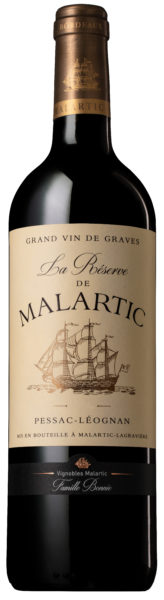
La Réserve de Malartic Pessac-Léognan
Overview: This is the second wine of Château Malartic-Lagravière
Production Area: 53 hectares
Terroir: Dry gravel and clay; subsoil of limestone with veins of clay
Grape Varietals: 45% Merlot, 45% Cabernet Sauvignon, 8% Cabernet Franc, 2% Petit Verdot (percentages change depending on the vintage)
Plantation Density: 10,000 vines/hectare
Training System: Double guyot
Yield: 43 hl/ha
Viticulture: Sustainable
Harvest: Manual
Vinification: In small, truncated, thermo-regulated wooden and stainless steel tanks for 28-30 days.
Aging: Traditionally done in French oak barrels for 15 months
Consultant: Michel Rolland
Tasting Notes: Beautiful, deep red color with glints of violet. Fine intensity on the nose, pleasantly complex, with red fruit, floral, smoky, toasted, and mineral notes. On the palate, it is mellow, smooth, and well-rounded with good volume. The same aromatic profile develops as in the nose, with fruity, toasted, smoky, slightly minerally notes. Plump tannins with good length and pleasant complexity. A charming, enjoyable wine that offers a good representation of the appellation and the terroir.
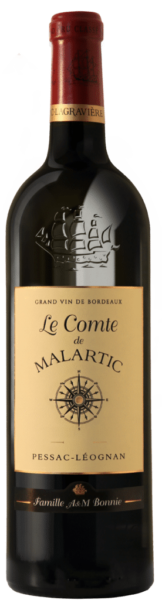
Le Comte de Malartic Pessac-Léognan
Overview: Le Comte de Malartic is another second wine of Château Malartic-Lagravière.
Appellation: Pessac-Léognan
Owner: Bonnie Family
Consulting Oenologist: Eric Boissenot
Production Area: 71 hectares (175 acres), 62 hectares of which are planted with red.
Soil: Quartenary Günzian well-drained gravels and clay gravels on shelly limestone and clay subsoil.
Planted Grape Varieties: 56% Merlot, 39% Cabernet Sauvignon, 3% Cabernet-Franc, 2% Petit Verdot
Plant Density: 10,000 plants/ha
Average Age of the Vines: 28 years old
Pruning Method: Double Guyot
Viticulture: Agroecology, plant cover, eco-pasture, minimal ploughing with horses. Sustainable farming, High Environmental Value certification 3 Opt A, ISO 14001 (EMS).
Harvest: Manual harvest by intra-plot passes, double sorting tables
Vinification: Double cap, thermoregulated stainless steel and oak vats. Vatting period lasts 21 to 23 days.
Aging: Early blending, traditional on fine lees in French oak barrels for about 15 months (30% new oak)
Château Margaux
 History
Known since the XII century when it was called “La Mothe de Margaux”, the property originally didn’t have any vines. The successive owners of “La Mothe de Margaux” were important lords, but it wasn’t until the arrival of the Lestonnac family that the estate began to look as we know it today. Between 1572 and 1582, Pierre de Lestonnac succeeded in completely restructuring the property as well as the vineyard. He anticipated the general evolution of the Médoc that had started to abandon cereal growing in favor of vines. At the end of the XVII century, Château Margaux occupied 265 hectares, land that wouldn’t be divided again. A third of the estate was dedicated to vines, which is still the case today.
Emperor Napoléon III paid an important service to the great red wines of the Médoc by organizing in Paris the Second Universal Exhibition in 1855. It was an occasion for him to glorify French products, among which were the prestigious Médoc wines. He wanted the wines to be presented in the form of a classification. A blind tasting was organized in Paris which led to this official classification in 1855. It divided about sixty Médoc growths, and a property in the Graves, into five quality levels. Four growths were classified “Premier Grand Cru Classé”; only Margaux was marked twenty out of twenty. This classification, which maintains its validity today, confirmed the qualitative hierarchy illustrated by the great price differences that had been practiced on the world market for a long time.
Fernand Ginestet and his son Pierre came on the scene. Fernand had made his fortune in wine trading. It was one of his friends, the Mayor of Saigon, and a wine importer who sent him the funds necessary to buy the estate. The Ginestet family acquired the whole property in about 1950. Fernand and Pierre patiently reorganized the vineyard. Pierre’s son, Bernard, looked after their trading business and developed one of the most respected wine trade establishments in Bordeaux. But the recession of the 1970s and the disastrous unsaleable vintages of 1972, 1973, and 1974 placed Pierre and Bernard in a desperate situation; nevertheless, they wanted to honor their commitments.
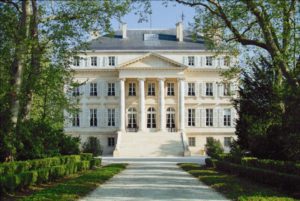 Their only negotiable asset was Château Margaux that they resigned themselves to selling. It took two years for Pierre and Bernard Ginestet to sell Château Margaux and when André Mentzelopoulos bought the property in 1977, the Burgundy community was astounded. However, Mentzelopoulos succeeded in convincing even the most pessimistic doubters with his energy and clarity of vision which he poured into the revitalization of Château Margaux. With almost spectacular speed, he re-established the quality of the wine and the reputation of the estate.
Upon his death, André Mentzelopoulos’ daughter Corinne Mentzelopoulos was immediately ready for the challenge. At the time of her father’s death, she was already established in the family group as management controller at Primistères, the company that managed the Félix Potin company. Surrounded by the team that her father had chosen, she followed in his footsteps so that Margaux was ready to take up another challenge, that of the extraordinary explosion in worldwide demand for Bordeaux wines starting in 1982. The Americans were the first to get enthusiastic for the classified first growths, quickly joined by the more traditional connoisseurs in Great Britain and Germany, followed by the Japanese, enthusiasts in Hong Kong and Singapore, the Russians, the Chinese, the Indians, the Brazilians….
Bordeaux has been blessed with a succession of great vintages with the true pinnacle of success being the 2009 and the 2010. At the same time, the Félix Potin company was transformed, the stores and the property were given up, and the group – now called Exor – became the majority shareholder in Perrier, which was at the time the world market leader for mineral water. Corinne Mentzelopoulos decided to find support in the development of a group which it seemed unwise to manage alone. At the beginning of the 1990s, Corinne Mentzelopoulos found an associate in the Agnelli family, then directed by Gianni Agnelli, the president of Fiat. This association lasted about ten years and, in 2003, when the Agnelli Group decided to dispose of the Château Margaux shares, Corinne Mentzelopoulos bought them immediately, thereby becoming the only shareholder in the estate.
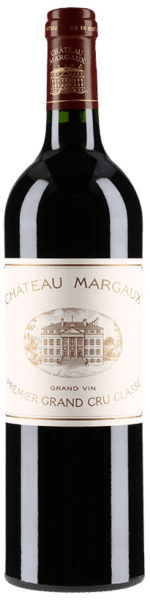
Château Margaux 1er Grand Cru Classé
Overview: Since the 17th century, the first wine of Château Margaux has been recognized as being one of the greatest wines in the entire world. It owes its unique qualities to the genius of its terroir as well as to the passionate work of a succession of generations. It’s a remarkable wine that comes from a combination of characteristics that are only rarely found: finesse, elegance, complexity, density, intensity, length and freshness. Although its tannic concentration may be exceptional, it’s rare to detect astringency.
The great vintages are distinguished by their formidable ability to move us. The lesser vintages give pleasure to wise enthusiasts. They offer the advantage of evolving very rapidly and, reveal, after a few years, instead of power, this subtlety that is the prerogative of great terroirs.
Château Margaux has an extraordinary ability to evolve. Over the years, it has developed a finesse, an aromatic complexity and a remarkable presence on the palate.
Grape Varieties: Cabernet Sauvignon, Merlot, Petit Verdot, and Cabernet Franc (percentages change depending on the vintage)
Vinification: Fermentation in oak barrels.
Aging: 18 to 24 months in new oak barrels. Fining with egg-white.
Annual Production: 130,000 bottles
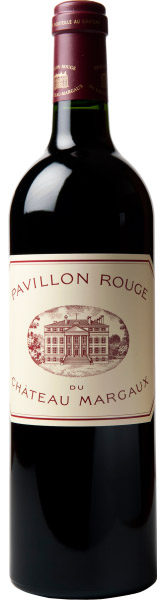
Pavillon Rouge du Château Margaux
Overview: The production of a second wine probably goes back to the beginning of the XVII century because it is inseparable from the search for excellence which started at that time. Sold under the name of “Château Margaux 2nd wine”, it took its permanent name of Pavillon Rouge du Château Margaux in 1908. After an eclipse between the thirties and the mid-seventies, its production restarted on the arrival of André Mentzelopoulos in 1977 and at first greatly increased in order to improve the quality of the first wine. From the mid – 1990s, the creation of a third wine in its turn, allowed for a more and more rigorous selection for Pavillon Rouge. For a few years now, a third of the harvest has gone into the first wine, barely 30% into the Pavillon Rouge, and the remainder is divided between the third and fourth wines.
The quality of Pavillon Rouge has become very close to that of the first wine because all the plots involved contributed to the blending of Château Margaux not so long ago. Of course there isn’t the same complexity, the same depth, the same “magic” but the flavors are close and the balance in the mouth leads to the same subtle senses of power and softness. In general it is ready to drink a little earlier whilst retaining an excellent potential to age largely beyond 30 or 40 years.
Grape Varieties: Cabernet Sauvignon, Merlot, Petit Verdot, and Cabernet Franc (percentages change depending on the vintage)
Vinification: Fermentation in oak barrels.
Aging: 18 to 24 months in new oak barrels. Fining with egg-white.
Annual Production: About 100,000 bottles
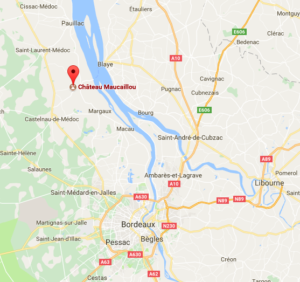
Château Maucaillou
History
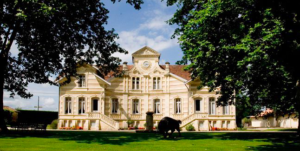
In 1875, the year of his marriage, J. Petit-Laroche offered his wife the construction of a fine residence opposite his Médoc cellars as a wedding gift. The result was the Chtaeau as we know it today. The Chateau MAUCAILLOU building is listed in the “BORDEAUX CHÂTEAUX” inventory collection. At the same time, J. Petit-Laroche created a new wine estate in the localities known as “MAUCAILLOU” and “CAUBET”, with an area of one and a half hectares, named Chateau MAUCAILLOU. “MAUCAILLOU” means “mauvais cailloux”, the French for bad stone, as the term was understood by the farmers of the middle ages, given that this type of gravel plot was not suitable for growing cereal, the main source of livelihood at the time. It was later discovered that such gravel outcrops constituted an ideal terroir for highly expressive vineyards.
In 1929, Roger and André DOURTHE purchased CAVES ET ENTREPOTS DE MOULIS (Moulis Cellars and Warehouses), located next to the railway station at Moulis-en-Médoc, to ensure easier shipment of wines throughout France and Europe. They concomitantly became the owners of Chateau MAUCAILLOU (2.5 hectares, with half of the vineyard in red varieties and the other half in white varieties). In 2006, Pascal DOURTHE became the manager of Chateau MAUCAILLOU, supported by his two sisters, Caroline and Magali.
The Terroir
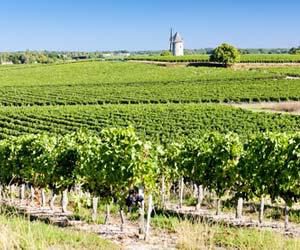
The MOULIS vineyard is the oldest in the Médoc, with traces found in title deeds dating back to the 15th and 16th centuries. The terroirs on which the 63 hectares of Château MAUCAILLOU vineyards grow consist of fine quaternary alluvium outcrops, a large part of which stems from the Güntz Garonne gravel stratum, at the origin of the Great Classified Crus of the Médoc. This gravel, with its big shiny stones, reflects the rays of the summer sun onto the grapes, thereby enhancing their perfect ripeness, an essential condition for the birth of a great wine.
Grape varieties : 50% Cabernet Sauvignon, 41% Merlot, 7% Petit Verdot, 2% Cabernet Franc
The harvest is often mixed, partly by hand and partly by machine, depending on plots, plant health and weather conditions. The grapes are first sorted in the vineyard. The harvest is then taken to the fermentation cellar in small bins to avoid crushing the grapes during transport.
Vinification
Vinification is carefully undertaken under the watchful eye of Philippe DOURTHE, graduate oenologist, in two modern vat rooms equipped with state-of-the-art technology. The vat room, in stainless steel, is entirely thermoregulated in order to apply the specific method that Philippe DOURTHE developed in 1982. It consists of vinifying at relatively low temperature over the first few days, in order to extract the quintessence of the fruit aromas of the grape, then, at the end of fermentation, letting the temperature rise to extract the finest tannins and the colour.
At MAUCAILLOU, malolactic fermentation follows immediately after alcoholic fermentation.
Château Maucaillou wines are aged in barrels for 18 to 20 months.
 In keeping with the finest tradition, nowadays respected in only the very greatest growths, the wines are aged in carefully selected new oak barrels. Philippe DOURTHE wrote his oenology thesis on the origin and characteristics of oak in the world. It is also one of his passions.
50 to 75% of the barrels are replaced by new oak for each harvest, depending on the vintage and on its capacity to handle more or less tannins from new oak of essentially French origin. Two large and fully insulated barrel ageing cellars, with a total capacity of 3,500 barrels, safely keep the first-year harvest, on the one hand, and the second-year harvest, on the other hand. During the two years of ageing, the wines are regularly racked, then fined with egg whites to ensure perfect clarity.
The average production of each harvest is 27,000 cases (324,000 bottles) of the first wine, and 9,000 cases (102,000 bottles) of the second wine (N°2 de MAUCAILLOU).
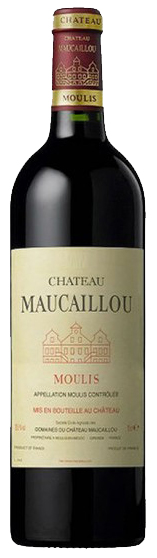
Château Maucaillou Moulis-en-Médoc
Production Area: 87 hectares
Soil: 80% Güntz gravel, 20% Clay-limestone
Average Age of the Vines: 30 years old
Varietal Blend: 52% Cabernet Sauvignon, 41% Merlot, 7% Petit Verdot
Annual Production: 27,000 cases
Aging: Aged in 40-75% new wood barrels for approximately 18 months
Tasting Notes: Fresh and floral with aromas of orange sorbet infused with red fruit. On the palate, the tannins are supple; very good structure with a long, virile finish.
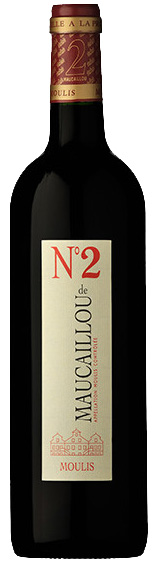
N°2 de Maucaillou
Overview: The second wine of Château Maucaillou is produced from the same fine terroir as the first wine.
Vinification: Following stringent sortings the N°2 de Maucaillou is aged by Philippe Dourthe with the same painstaking and watchful care as is devoted to the 1st wine.
Tasting Notes: Charming, drinkable, generously fruited, round, and fleshy with a long finish and silky tannins.
Average Annual Production: 108,000 bottles
Cellaring Potential: 5-10 years
Serving Temperature: 16-18°C
Food Pairings: Grilled red meat, duck
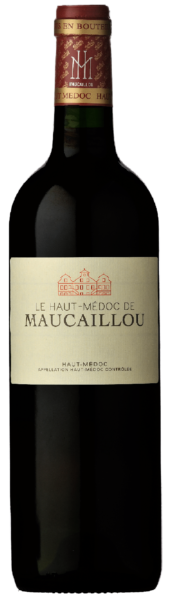
Le Haut-Médoc de Maucaillou
Owners: Sarl Chateau Maucaillou – Famille Dourthe
Soil: 76% Guntz gravels, 24% Clayey limestone
Production Area: 13 hectares
Grape Varieties: 60% Cabernet Sauvignon, 24% Merlot, 16% Cabernet Franc
Plant Density: 7,000 vines/ha
Average Age of the Vines: 25 years
Harvest: 100% harvested mechanically with sorting in the cellars
Vinification: Fully temperature-controlled vat room. Vinification done according to grape variety and quality of the harvest. Traditional vinification with a pre-fermentation maceration at 22 degrees, then daily pumping-over of the vat during alcoholic fermentation. Fermentation temperature controlled between 26 and 28 degrees Celsius. Devatting takes place on average 3 weeks after the beginning of alcoholic fermentation.
Aging: Aging of the lots in barrels for a minimum of 18 months. Filtration done with egg whites. Bottling on premises.
Annual Production: Approx. 70,000 bottles
Château Mauvesin Barton
The Estate
The history of Chateau Mauvesin dates back to the 15th century. It was in 1457 that Jean de Foix Grailly became proprietor of the first Chateau de Mauvesin in the district of Moulis en Médoc. At this time, it was a true fortified castle with towers and battlements. 50 years later, it was acquired by the La Rivière family through the marriage in 1582 of Marguerite de La Rivière with Jacques Le Blanc, who became lord of Mauvesin. Soon after the Revolution in 1792, the old chateau was seized by the state and put up for sale in Lesparre, where it was attributed to “citizen” Clarcke acting for the account of Pauline Le Blanc. The old chateau remained the property of the family but due to its state of ruin, it was demolished in 1852.
The construction of the present chateau in 1853 on the site of the original chateau is thanks to Marquis Lodoïs Le Blanc de Mauvesin and his wife. On the advice of architect Perrier and inspired by the style of Louis XIII, the chateau consists of “two pavilions and two turrets, combining elegance and solidity. The façade is upon a magnificent garden with a pond and a beautiful collection of conifers.” After 2 years labor, the chateau remains as it was when constructed in 1853 and the trees planted at the creation of the park constitute this timeless home.
Having built the chateau in 1853, the Marquis Lodoïs Le Blanc de Mauvesin died in 1884 leaving no direct heirs. He decided to leave his patrimony to his first cousin, Hyppolite de Baritault du Carpia, his closest relative. The Baritaults, an eminent family originally from the Vendée area, kept Chateau Mauvesin for 4 generations up to its sale in 2011.
The Viscount and Viscountess Alain de Baritault du Carpia, heirs of the family Le Blanc de Mauvesin, sold the property on the 4th August 2011 to Lilian and Michel Barton Sartorius. The Barton family has for eight generations been owners of the Crus Classés Langoa and Leoville Barton, situated in the Saint Julien appellation.
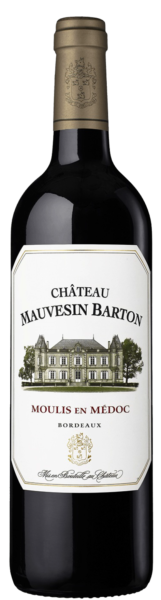
Château Mauvesin Barton Moulis-en-Médoc
Overview: In August 2011, The Barton Sartorius family acquired this historical wine producing estate and its Château that was re-baptized Château Mauvesin Barton. With the Barton family’s centuries of experience and unique expertise behind them, each of the four family members plays a specific role, perpetuating tradition and sharing their passion : Lilian Barton Sartorius takes on the management of the Château, Michel Sartorius takes care of the wine distribution, Mélanie Barton Sartorius becomes technical manager and Damien Barton Sartorius brings his expertise to the commercialisation of the wine.
Terroir: The vineyard is situated in the “Moulis-en-Médoc” appellation, to the north of Bordeaux, on the left bank of the Gironde estuary. Part of the soil is clay-gravel, perfectly adapted for the development of Cabernet-Franc and Merlot. Another part is made up of fine gravel and gritty sand, allowing the Cabernet Sauvignon to reach full ripeness. As for all the Barton family activities, great importance is attached to environmental protection and the quality of the wines produced. The 55 hectares of vines comprise 54% Merlot, 35% Cabernet Sauvignon and 11% Cabernet Franc.
Alcohol Content: 13.5%
Vinification: The younger vines are picked by hand. After careful selection, the grapes are placed in temperature-controlled stainless steel vats for the fermentation and maceration phase. The ageing process lasts 12 to 15 months, in French oak barrels of which one third are new. The casks rest on a gravel bed to regulate humidity.
Aging: 1/3 new wood barrels
Tasting Notes: Ruby color, nose of toasted hazelnut and red fruits (cherry, blueberry). Delicate tannins. Wine with balance and finesse. Fresh, almost minty finish. Nice length and drinkability.
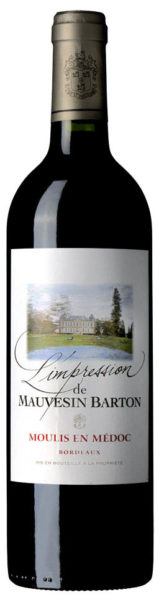
L’Impression de Mauvesin Barton
Overview: L’Impression de Mauvesin Barton is the second wine of Château Mauvesin Barton. The second wine is the result of the selection of the Grand Vin.
Owner: Barton-Sartorius family
Vineyard Manager: Laurent Crouzet
Cellar Master: Bruno Petit
Production Area: 42 hectares
Location: Located in Moulis-en-Médoc, Castelnau and Avensan towns, 30 km North of Bordeaux
Soil: Calcareous clay conducive to the development of Cabernet Franc and Merlot, with some gravel and sand to achieve an exceptional Cabernet Sauvignon
Average Age of the Vines: 35 years old
Pruning: Double cane pruning, weed on the rows, reasoned additives
Grape Varieties: Merlot 50%, Cabernet Sauvignon 35%, Cabernet Franc 15%
Harvest: Optical sorting at the reception of the harvest, vibrating dump
Vinification: Plot by plot vinification, thermo-regulated, stainless-steel vats of small volume, maceration and fermentation in tank
Aging: In barrels
Average Yield: 45 hl/ha
Alcohol: 13%
Production: Approx. 75,000 bottles
Tasting Notes: Ruby color with toasted notes and a ripe nose. On the palate, silky tannins and a good aromatic persistence.
Château Meyney (Sustainable)
The Estate
Château Meyney is one of the oldest estates in the Médoc. In 1662, it was a convent mentioned in records under the names “Couvent des Feuillants” or “Prieuré des Couleys”. Today, the estate stretches over some of the best hilltops above the Gironde Estuary. The river lying alongside the first rows of vines makes for a majestic, serene landscape.
The estate belonged to the Luetkens family for several generations, and was then acquired by Mr. Désiré Cordier in 1919. In 2004, CA Grands Crus, a subsidiary of the Groupe Crédit Agricole, acquired Château Meyney, with a determination to strengthen the potential of this outstanding cru. An improvement plan was put together for the entire estate. It is supervised today by Anne Le Naour, the Technical Director, and the consultant oenologist, Hubert de Bouärd.
The company CA Grands Crus, a fully-owned subsidiary of the Groupe Crédit Agricole, became, in 2004, the owner of prestigious Bordeaux estates: Château de Rayne Vigneau, 1er Grand Cru Classé Sauternes, Château Grand-Puy Ducasse, 5ème Grand Cru Classé Pauillac, Château Meyney, Saint-Estèphe, Château Blaignan, Cru Bourgeois Médoc.
Terroir
The château lies at the center of a single block vineyard of 51 hectares (126 acres), overlooking the Gironde. The presence of the estuary protects the estate from frosts. The vineyard is planted on Garonne gravels. The vines are an average age of 35-40 years old, divided between 60% Cabernet Sauvignon, 30% Merlot, and 10% Petit Verdot. The vines climb to an altitude of 20 meters up, quite a steep slope, ensuring good natural drainage of the soil. Similar to “Pétrus”, a layer of blue clay about 3-meters thick lies at a depth of 2.6 meters below the surface. These remarkable natural factors give the wine an exceptional richness.
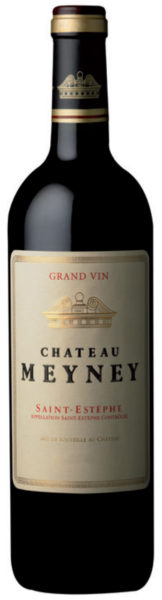
Château Meyney Saint-Estèphe
Soil: Garonne Gravels, clay-limestone
Average Age of the Vines: 35-40 years
Grape Varieties: 60% Cabernet Sauvignon, 25% Merlot, 15% Petit Verdot
Viticulture: Parcel management of soil and vineyard. Certified sustainable farming.
Vinification: Following hand-picking and selection of the grapes on the vine, the grapes are carefully selected in the winery, passing through a brand-new optical sorting machine. The grapes are then fermented in vats of varying capacities, which allow us to adapt to the size of each batch. The fermentation starts after a few days of cool soaking. After fermentation, maceration continues for an average of 30 days before the wine is run off. Part of the wine goes through malolactic fermentation in new barrels.
Aging: The wine is aged in French oak barrels from 18-24 months depending on the vintage. 40% of the barrels are renewed each year.
Average Yield: 50 hl/ha
Production: Around 160,000 bottles
Tasting Notes: The unusually high share of Petit Verdot explains a particular trait of the wines, which regularly show notes of leather and musk after a period of time. The wine is full-bodied, well-rounded and structured. After aging, the wine displays the remarkable charm of the best Saint-Estèphe: complexity, balance, and harmony.
Château Montrose
History
The story of Montrose, written by three families of owners over twocenturies. As pioneers in the Médoc, visionary builders and astute managers, they tended and got the best out of its unique terroir.
Théodore Dumoulin
He discovered the patch of heathland that everyone had forgotten about. In 1815, he planted the vineyard and built the necessary facilities to operate the estate and make the wine. 1855 marked the birth of a Grand Cru with the inclusion of Château Montrose in the official classification, a spectacular achievement for a vineyard barely 40 years old.
Encouraged by this success, Etienne Théodore Dumoulin continued to expand his vineyard. On his death in 1861 he left his heirs an estate spanning 95 hectares (234 acres), its current size.
Mathieu Dolfus
He acquired Montrose in 1866 and began to reorganise the estate. Designer of the “Montrose village” with its squares and streets, he had a huge influence on the life of the estate. A visionary entrepreneur, he managed to halt the scourge of phylloxera by installing a windmill which pumped water from an underground well and flooded the land, saving the vineyard. The windmill, preserved by successive generations of owners, is now one of the symbols of Montrose.
Jean-Louis Charmolue
From 1896 to 2006, following in the footsteps of Mathieu Dollfus the builder after his death in 1886, the Charmolüe family guided the estate along the path of stability and excellence.
The Terroir
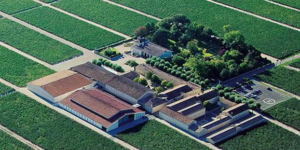 Blessed with undisputed natural assets combined with advantages nurtured over the centuries, Château Montrose has one of the region’s most privileged winegrowing terroirs. The Montrose terroir corresponds to what geologists call “elite cores”. Over millions of years, a complex process of geological layering resulted in the creation of outcrops, ideal for making fine wines and ensuring natural drainage towards the estuary.
The soil on these terraces consists of gravel mixed with sand on the surface over a clay-rich subsoil in which natural reserves form at depth, providing the vines with the water they need.
At Château Montrose, the largest parcel is two hectares (five acres), the smallest only a few hundred square metres, but each has its own personality, its own particular soil or subsoil, and vines whose age, yield, variety or rootstock are different from those of its neighbour. In the end it is the wine itself which, in its own way, brings this amazing patchwork together, since it is both the result and the synthesis of each micro-terroir.
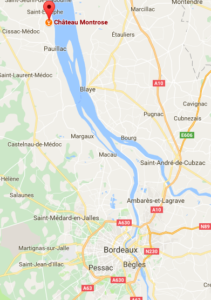
Five kilometres north of Pauillac in Saint-Estèphe, the northernmost appellation in the Médoc, Château Montrose is situated on a very well-drained and ideally exposed gravelly outcrop which runs for over a kilometre along the Gironde estuary.
The presence of a broad estuary, the largest in Europe, has a decisive effect on the local microclimate. Montrose is one of the few estates to enjoy such a highly privileged situation.
The proximity of this vast water mass acts as a natural regulator. It attenuates the excessive cold which can be so devastating in the form of spring frosts,
and it tempers the destructive effect of heatwaves which starve the vines and grapes of water in the height of summer. That is why the Montrose vineyard escaped the frost in 1991 and the development of botrytis during the 2013 harvest.
Montrose’s situation, on an outcrop overlooking the estuary, is precious to the vineyard because of its exposure to wind and sun. The rows of vines are planted north-south, enabling the grapes to take full advantage of the sun throughout the day. The dominant north-west winds dispel excessive humidity when it rains.
The mix of grape varieties at Montrose, with Cabernet Sauvignon predominant (60% of the vines), is typical of the finest Médoc estates. Cabernet Sauvignon gives its best on warm, gravelly and permeable soil with clay subsoil which helps to store the water the vines need in drought conditions. The Garonne gravel terroirs found at Montrose are its preferred home.
Parcels of Merlot (32%), Cabernet Franc (6%) and Petit Verdot (2%) are also planted where the soil suits them best, enabling the grapes to reach full maturity and express the complexity typical of the terroir.
Each variety is planted on the terroir, in the parcel and with the density that will optimise its qualities.
At Montrose, Merlot brings a gentle, feminine touch along with silky tannins and aromatic flavours. Cabernet Franc is a very high-quality variety, known for its elegant aromas, which gives fresh and complex wines, while Petit Verdot brings colour, along with pleasant spice and pepper flavours.
Vinification
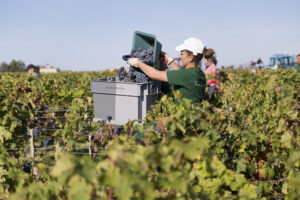 After an initial selection in the vineyard during picking, the grapes are brought to the vat-house. The individual grapes are then sorted optically and again by hand before being finally transferred to the vats. The wines are vatted for 25 days at most, respecting the fruit and the substance. All the lots are kept separate after running-off so that all the different profiles of the vat wines are available for blending. Blending tastings start in December. All the samples – nearly 60 different lots – are tasted and classified according to their style and profile. They are then selected and blended according to the personality sought for each wine.
From January, each vintage is barrel-matured in a specific barrel hall.
The Premium Wine, Château Montrose, is matured for 18 months in 60% new French oak barrels from eight different coopers.
For the second wine, La Dame de Montrose, the proportion of new barrels is 30% and the wine is matured on average for 12 months.
The Saint-Estèphe de Montrose is matured for 12 months in 20% new barrels.
During the maturing process the wines are racked every three months or so. The traditional method used at Montrose involves transferring the wine from one barrel to another by gravity so that the clear wine can be perfectly separated from the lees which settle naturally at the bottom of the barrel.
Fining is carried out in barrels in the traditional way, with fresh egg whites, in order to refine the wine and soften the tannins.
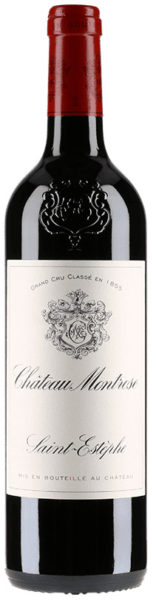
Chateau Montrose Saint-Estèphe 2ème Cru Classé
Overview: The result of rigorous selection at each stage of production, in both the vineyard and the winery, this great, predominantly Cabernet Sauvignon wine is typical of the Saint-Estèphe appellation. Structured and tannic but with all the elegance and refinement of a Grand Cru Classé, with time it develops a delicate and complex bouquet. This wine has considerable aging potential and is exceptionally long-lived. Certain vintages (1921, 1929, 1982, 1990, 2009) are considered legendary.
Grape Varieties: Cabernet Sauvignon, Merlot, Cabernet Franc, Petit Verdot
Aging: Matured for 18 months in 60% new oak barrels, the premium wine accounts on average for 55% of the estate’s total production.
Tasting Notes: Dense and profound color. Complex nose delivering aromas of morello, blond tobacco and chocolate. Slightly wooded. Long and full on the palate with aromas of morello, raspberry, mocha. Supple and long finish on neat and coated tannins. Balanced and harmonious. The tasting was very homogeneous, soft and silky.
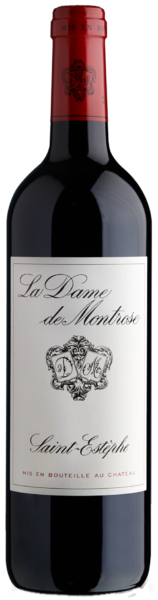
La Dame de Montrose
Overview: Made to the same rigorous standards as the first wine, from grapes grown in the same vineyard, La Dame de Montrose is the estate’s second label. Consistently reliable and reaching maturity sooner, the wine was created in 1986 in tribute to Yvonne Charmolue, who ran Château Montrose single-handedly from 1944 to 1960.
Annual Production: Production varies from year to year but accounts on average for 30% of the total production of the Montrose vineyard.
Aging: It is matured for 12 months in 30% new oak barrels.
Tasting Notes: Supple and silky Merlot generally predominates in the varietal mix. Its very pronounced red fruit aromas and flavors reflect another expression of the terroir in a distinctive style which is less elaborately complex than that of the first wine.
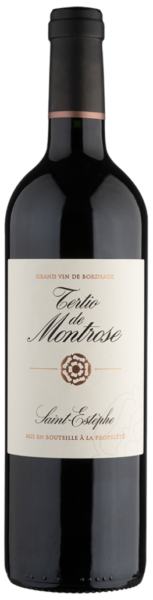
Tertio De Montrose
Overview: Third blend made from batches of the younger vines and the lees wines, the Tertio de Montrose is produced on the exceptional terroir of Château Montrose and vinified by its teams. Named Saint-Estèphe de Montrose when created in 2008, it was renamed Tertio de Montrose in 2016. This wine is made with the same quality requirements as the Grand Vin and La Dame de Montrose selections. Typical of the Bordeaux blends, it can be enjoyed in its early years.
Grape Varieties: Cabernet Sauvignon, Merlot, Cabernet Franc, Petit Verdot
Harvest: Mid-September
Aging: 12 months in barrels (of which 15% are new)
Winemaker Tasting Notes: “The color is a beautiful cherry red. The nose reveals aromas of red fruit accompanied by some spicy and lightly smoky notes. The attack, full and round, reveals beautiful freshness on the palate.”
Château Nénin
History
On the eve of the 1997 harvest, Jean-Hubert Delon purchased Château Nénin, which had belonged to his cousins, the Despujol family, since 1847. A major restructuring was immediately undertaken.
The pruning and trellising methods were reviewed, the land was drained, the vines were replanted or uprooted, and the equipment modernized. The aging and storage cellars were extended and completely re-fitted, and air conditioning was added. A new vat room, furnished with state-of-the-art equipment, was built thereby completing the total transformation of the property.
Terroir
Château Nénin’s vineyards grow on a single block of land with the exception of one plot. In Pomerol, where it is rare for an estate to exceed 10 hectares, Château Nénin’s vineyard is considered very large, with 32 hectares of vines in production. As a consequence, its terroir includes the many, diverse soils that characterize Pomerol. It is mainly made up of Oligocene deposits covered by Dordogne alluvial gravelly formations; siliceous clay and gravel, quartz, granite, iron-deposits and basalt pebbles. Château Nénin’s vineyards grow on the great clay-gravel terroirs of the Pomerol Plateau. The grape varieties planted are Merlot 76%, Cabernet Franc 23%, and Cabernet Sauvignon 1%.
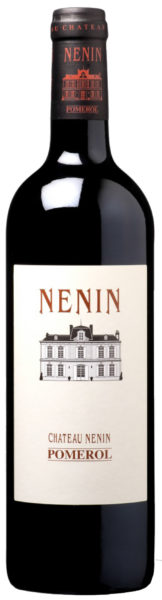
Château Nenin
Overview: According to the Delon family, Château Nénin is the epitome of a great Pomerol “vin de garde” (wine for laying down). It combines power and elegance, complexity and balance, purity and refi nement. The gradual increase of Cabernet Franc within the vineyards gives the wine tautness, distinction and freshness. To really appreciate the Grand Vin’s ageing ability, you may need to be patient. Like all great Pomerol vins de garde, Château Nénin blossoms over time.
AOC: Pomerol
Production Area: 32 ha
Grape Varieties: Merlot, Cabernet Franc (percentages vary depending on the vintage)
Average Age of Vines: 28 years
Density of Plantation: 6,300 to 7,100 plants/ha
Aging: Château Nenin is aged in 30% new oak (or less) for an average of 18 months.
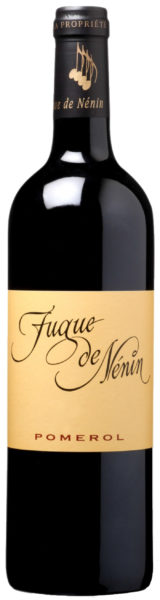
Fugue de Nénin
Overview: Fugue de Nénin was created and first sold in 1997. Fugue comes from sandy-clay soils found in the eastern part of the Château’s vineyards, as well as from the young vines planted on the great plateau terroirs. This second wine is a typical example of the charm of Pomerol. Fugue is a reference to music; it means a repetition of the main theme. This name makes sense when you taste the wine – Fugue complements the tonalities of its older sibling extremely well, while providing its own attractive and entertaining rendition. The wines are smooth and silky and can be enjoyed earlier than those of the Grand Vin.
Grape Varieties: Merlot, Cabernet Franc (percentages vary depending on the vintage)
Tasting Notes: Intense garnet color. The nose is fine, elegant, with notes of red fruit and citrus. On the palate, the tannins are supple with fruity hints.