

Château Olivier
 Overview
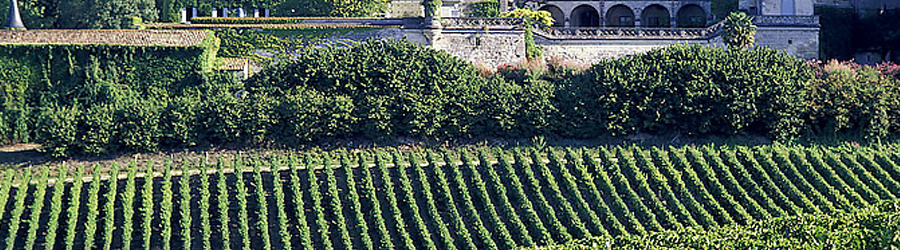
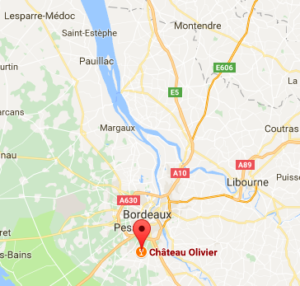
At the heart of a vast estate containing forests, prairies, and vines, Château Olivier sits on a clearing emerging from the woods. Its beautiful architecture, its bodies of water, and the quality of its annex buildings all add up to make an exceptional site in natural surroundings, situated only eleven kilometers from the town of Bordeaux.
History
Olivier is a very old seigniory, dating back to the Middle Ages. It is said that the Black Prince enjoyed coming here to hunt, as the surrounding forests were so well-stocked with game. Since the 19th century, the estate has belonged to an old Bordeaux family called the Bethmanns. Château Olivier wines received official classification in 1953, for both red and white varieties. In 1867, Alexandre de Bethmann was elected mayor of Bordeaux, then his family acquired Château Olivier, which is still managed today by one of his descendants. Nowadays, the Bethmann family is continuing their work at Olivier. Over the last few years, the vineyards of Château Olivier have seen considerable work and investment. It has entrusted the estate’s general management to Laurent Lebrun, an agronomist and winemaker. Together with Philippe Stoeckle (technical director), Marie France Hairon (administrative and financial manager), and Estelle Mirieu de Labarre (sales and marketing), this forms a competent and passionate team.
Red Grapes Varieties: 60% Merlot, 37% Cabernet Sauvignon, 3% Petit Verdot
White Grapes Varieties: 78% Sauvignon Blanc, 20% Sémillon, 2% Muscadelle
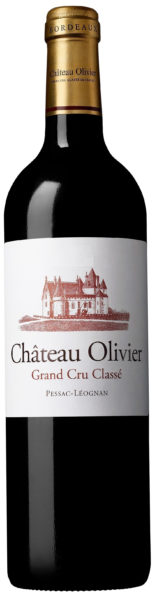
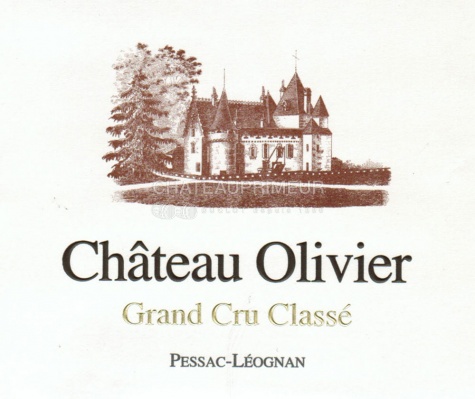
Château Olivier Pessac-Léognan Grand Cru Classé de Graves
Terroir: Château Olivier is endowed with the rare characteristic of having terroirs which are equally excellent for red and white wines. Across 55 hectares of gravelly terroir over a clay and limestone base, six different grape varieties are grown. An extremely precise geological survey revealed new potential for this terroir, and recent planting has allowed the vineyard to return to its former metes and bounds of the 18th century.
Average Age of the Vines: 25 years
Plant Density: 8-10,000/Ha
Grape Blend: Cabernet Sauvignon, Merlot
Vinification: Vinified in temperature controlled, stainless-steel vats. Malolactic fermentation takes place in tank.
Aging: The wines of Chateau Olivier are aged in an average of 30% new French oak barrels for between 12 and 14 months.
Winemaker Notes: “This wonderful vintage opens with an already complex bouquet that marries together woody, licorice and tobacco notes. With unusually soft and smooth tannins, this is a wine to be chewed on like a fruity sweet, its aromas invading the entire palate. This wine combines power, and smooth tannins, this is a wine to be chewed on like a fruity sweet, its aromas invading the entire palate. This wine combines power, elegance and length to enchant those who taste it. An excellent wine to be put down for aging.”
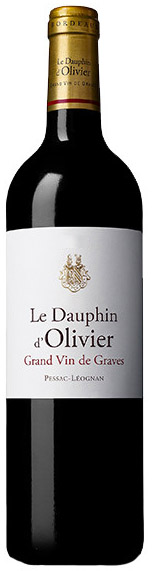
Le Dauphin d'Olivier
Overview: Le Dauphin d’Olivier is the second wine of Chateau Olivier
Grape Varieties: Merlot, Cabernet Sauvignon (majority Merlot)
Average Age of the Vines: 25 years
Plant Density: 8-10,000 vines/ha
Vinification: Vinified in temperature controlled, stainless-steel vats. Malolactic fermentation takes place in tank.
Aging: The wines of Chateau Olivier are aged in an average of 30% new French oak barrels for between 12 and 14 months.
Tasting Notes: Beautiful deep violet color. The nose is very expressive with red fruit and blackberry notes. On the palate, there is an aromatic freshness, roundness, and lingering spicy, toasted notes. The tannins are well integrated and elegant, and also suggest a good aging potential.
Château Palmer
 Overview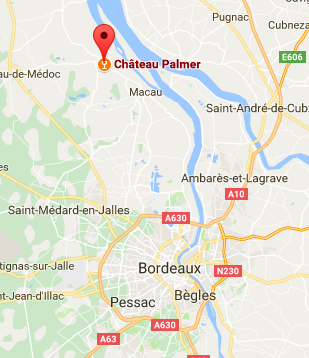
Château Palmer is a winery in the Margaux AOC of the Bordeaux region of France. The wine produced here, was classified as one of fourteen Troisièmes Crus (Third Growths) in the historic Bordeaux Wine Official Classification of 1855. The property is situated in the communes Margaux and Cantenac, and its wine is considered to be one of the two most popular Third Growths.
Since 1998, the Château has been producing also a second label, not a second wine, Alter Ego de Palmer, selected from the same quality terroirs, but employing different wine-making techniques and different proportions of grapes. In order to produce an earlier-drinking wine. Some 40% of the estate’s production, is now sold as Alter Ego de Palmer. The result has been a significant reduction in the quantity of wine sold as Château Palmer (from nearly 20,000 cases before the introduction of Alter Ego de Palmer to 11,000-12,000 cases currently). The previous second wine, La Réserve de Général, is not a component of Alter Ego de Palmer, but is now sold off in bulk.
History
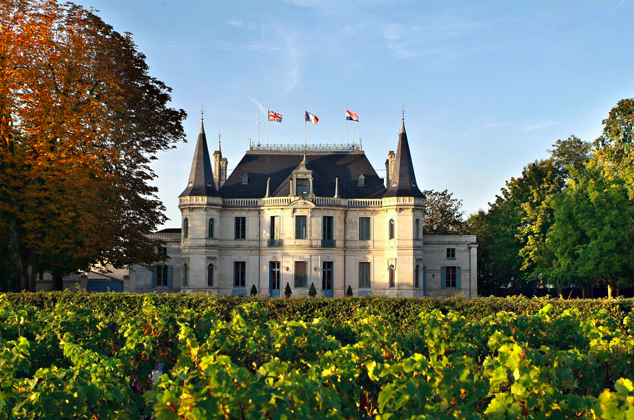 Once a part of the ancient estate, Château d’Issan, divided by the heirs of the Foix-Candale family in 1748, 50 hectares of vineyards came to the Gascq family. Though without association to any noble château, the wine produced became Château de Gascq, quickly established in the market and served at the court of Versailles under Louis XV.
By 1814, the widow of the final Gascq heir, Madame Marie Bumet de Ferrière, sold the property for fr 100,000 to an Englishman, Major General Charles Palmer. Having retired from military life, Palmer invested in the property over the following years, acquiring additional land and facilities. By 1831, the domain extended 163 hectares with 82 hectares under vine, buildings in Issan, Cantenac and Margaux, and had a reputation on a par with Château Margaux and Château Beychevelle. In the early 1840s, Palmer had economic difficulties which would later affect the estate’s position in the 1855 Classification, and was forced to sell the property to madame Françoise-Marie Bergerac in 1843 for fr 410,000, at a substantial loss.
Before World War II, Château Palmer’s owners bought Château Desmirail, another Third Classified Growth, and uniquely in 1963 Palmer wines were sold under the Desmirail name.
Since 2004, Palmer has been managed by Thomas Duroux, formerly a winemaker of Tenuta Dell’Ornellaia.
The Terroir
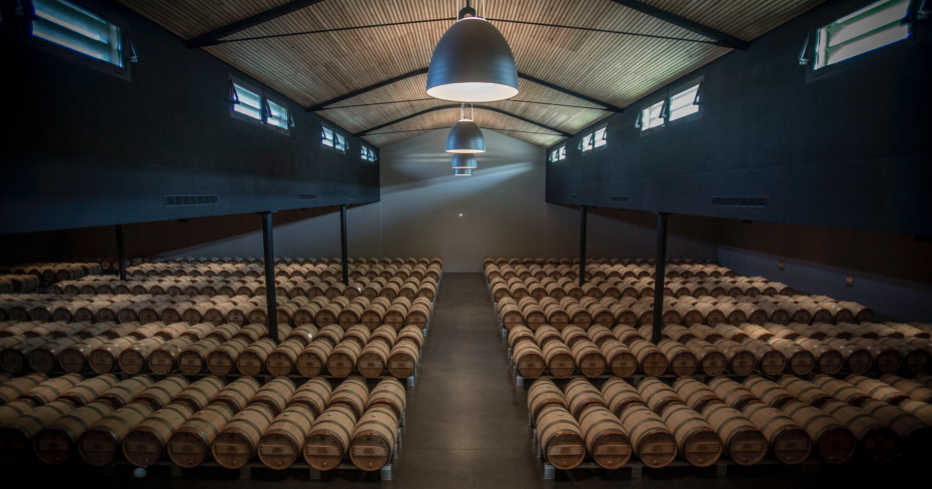 Location: Château Palmer’s has a natural logic: a long strip of land set between the Atlantic Ocean and the Gironde estuary. Behind the alluvial land of the palus sits the Brauzes plateau, the first gravelly terrace. This is well-drained land, rich with the deposits of the Garonne and Dordogne rivers, but washed clean of organic matter. Difficult soil for agriculture, but exceptional for grape growing.
Acreage: 55 Ha
Grape Varietals: A grammar composed of equal parts Cabernet Sauvignon and Merlot, topped off with a touch of Petit Verdot. The last is often an exception in the Médoc, but at Château Palmer a rule. Because it is not the variety that determines the quality of the wine, but rather how each variety’s essential characteristics asserts its influence.
47% Cabernet Sauvignon, 47% Merlot, 6% Petit Verdot
Density of the vines: 10.000/Ha
Average age of the vines: The vines have an average age of 38 years and about 1 hectare of land is cleared and replanted each year.
Aging: 18 to 21 months less half of them in new wood.
Biodynamics: Neither a preconceived idea, nor a posture. At first, biodynamics was simply an experiment, sparked by curiosity. The first trials in 2008 proved inconclusive, so meetings were organized with adherents of the method. Slowly, it became evident what truly lies at the heart of biodynamics: a return to the essence of farming. And thus an idea became a conviction – to turn the page on a monoculture, and to recreate a living agricultural organism, in all its diversity. Now, sheep graze, grass grows, flowers and plants with healing properties bloom, and agrochemicals have disappeared. With biodynamics, complexity becomes a source of shared enrichment, where the fruits of human labour benefit people, plants, and all that surrounds. An exquisite equilibrium.
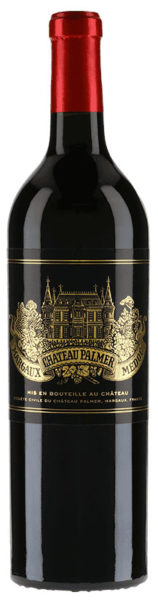
Château Palmer Margaux
Overview: Troisieme Grand Cru Classe in 1855. This is the second most highly rated Margaux wine (based on critic scores): the 2015 vintage was given a score of 96 by The Wine Advocate and the 2015 vintage was given a score of 18/20 by Jancis Robinson. This wine has received more awards than any other wine from the region: the 2011 vintage was awarded Blue-Gold from the Sydney International Wine Competition, and the 2010 vintage was awarded 3 Stars Coup De Coeur from the Guide Hachette des Vins. Among the highest-priced wines from Margaux.
Grape Varieties: Merlot accounts for over 40% of the blend, and as much as 60% in some older vintages, and Petit Verdot is also a relatively significant component, always restricted to 35 hl/ha in order to maximize ripening, and it may account for up to 8% in some recent vintages. The vines have an average age of 38 years and about 1 hectare of land is cleared and replanted each year.
Soil: These stones vary in type, including quartz and quartzite, chalcedony and lyddite, originating from the Quaternary era, much of it arriving in Bordeaux having been swept down from the Pyrenees by the Garonne. They form a fairly deep surface layer, up to four metres deep in places, over a hard bedrock.
Aging: 21 months in oak of which 45% is new
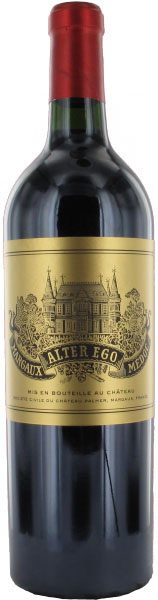
Alter Ego de Palmer
Overview: The Second Wine of Chateau Palmer, Alter Ego was born with the 1998 vintage. It resulted from a new approach to selecting and blending devised to interpret the Château Palmer terroir differently without departing from the values that make the reputation of our wines – namely, finesse and elegance, aromatic richness, harmony and length.
Grape Varieties: Merlot, Cabernet Sauvignon (percentages vary depending on the vintage)
Vinification: At the end of the summer, the slowly maturing berries are regularly tasted to evaluate their potential. The wine makers pay attention to the taste of the grape, the thickness of the skin, and the resistance of the seed. By this time, they already have a sense of what the wines will be like. They are looking for lush grapes for Alter Ego that will release the aromas of fresh fruit. Harvesting and vinification decisions are made based on the idea that they have of the Château Palmer and Alter Ego style. Final blend tastings usually come to confirm their intuitions.
Aging: The batches chosen for Alter Ego are then blended and put into barrels to age for 18 months. The fruitiness and aromatic intensity are preserved by the use of a moderate percentage of new oak barrels (25 to 40%).
Tasting Notes: Offering intense, crispy and juicy fruits, Alter Ego is a spontaneous uninhibited wine, soft and round as soon as it has finished barrel ageing. Its lush aromas and supple tannins make it a wine that can be appreciated in the first years after bottling.
Château Pape Clément
The History
For more than 750 years, Château Pape Clément has been producing fine wines on the same terroir, with the first harvest recorded as taking place in 1252. At this time, it was called Domaine de la Mothe. The estate was purchased at the end of December 1299 by Gaillard de Goth, son of a famous family from the south of Bordeaux. This purchase was made at the request of Bertrand de Goth, who had just been appointed Archbishop of Bordeaux, and for this reason could not accede to the property. On being named Pope in 1305 (with the support of Philip IV, King of France), Bertrand De Goth took the name Pope Clement V, and in 1306, a few days before the death of Gaillard de Goth, Clement V was given the Pessac estate by his dying brother, thus giving his name to the Château.
Bertrand de Goth liked vine-growing and greatly concerned himself with the vineyard of la Mothe. When he became Pope, he considerably contributed to the development of viticulture, particularly in the Rhône Valley and all around Avignon. It is partly thanks to him that certain growths in Châteauneuf-du-Pape, Gigondas, and Beaumes-de-Venise could and still can rival the best wines of Bordeaux.
Many centuries later at the turn of the 1980s, Bernard Magrez, a passionate wine entrepreneur, took the reins at the Château and was to give this grand cru classé an unprecedented international aura. In 1985, he marked the definitive return to high-level production, by now further enhanced by the talents of the famous consulting oenologist, Michel Rolland. Bernard Magrez put in place vinification by plot, a guarantee of complexity and refinement in the wine: the grapes from different plots are vinified in separate tanks, to allow them to fully express their specific characteristics before blending.
Bernard Magrez made every effort to allow the exceptional terroir of Château Pape Clément to stand the test of time and express the finesse that had made the reputation of its wines. It was in 2009 that these efforts were rewarded with the mythical score of 100 from the critic Robert Parker for Château Pape Clément white, and then the same score for Château Pape Clément red the following year.
Thanks to hard work, constant questioning, the alliance of tradition and innovation and a remarkable terroir, Château Pape Clément, Grand Cru Classé de Graves, continues each year to amaze wine lovers with its exceptional quality.
The Terroir
The estate of Château Pape Clément is part of the Pessac-Léognan appellation situated in the Graves viticultural area. Based on a soil with exceptional components, the 60 hectares of this vineyard are devoted to the meeting of passion and work.
The Château terroir is situated on the oldest of the alluvial terraces, called the “Pyrenean gravel layer”. The originality of the Pape Clément site lies in the presence of a thin film of more recent Garonne gravel, deposited a million and a half years ago.
The diversity of the terroir of Pape Clément allows for the ripening of Cabernet Sauvignon, Merlot, Cabernet Franc, and Petit Verdot for the production of the red wine and Sauvignon Blanc, Sauvignon Gris, Sémillon, and Muscadelle for the production of the white wine.
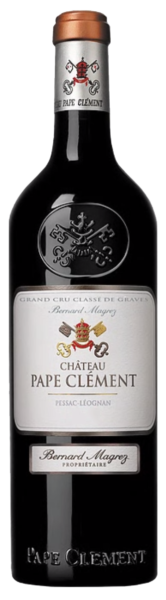
Château Pape Clément Pessac-Léognan Grand Cru Classé de Graves
Grape Varieties: 56% Cabernet Sauvignon, 40% Merlot, 4% Cabernet Franc.
Viticulture: Parcel based management. Grass grown between the grass, ploughing between vine rows. Integrated pest management, vigor control. Debudding, removal of side shoots, green harvesting. Tillage with animal traction. Terra Vitis Label and HVE3 Label (high environmental value 3th level ).
Harvest: Manual harvest in small crates
Vinification: First sorting in the vineyard, manual harvest in crates. Manual destemming berry by berry and use of a sorting table. Transfer into 30-70 hl wooden vats by gravity flow. Low temperature pre-fermentation maceration. Manual punching down. 30-40 day maceration. The wine is run off into French oak barrels by gravity flow. Malolactic fermentation in oak barrels.
Aging: 18 months in oak barrels
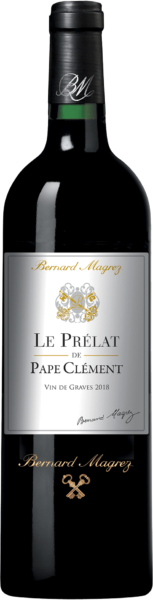
Le Prélat De Pape Clément Rouge
Appellation: AOC Graves
Terroir: The Prélat De Pape Clément’s vineyard is nestled in the heart of the Graves region, on the left bank of the Garonne River where the soil and the climate are ideal for grapes to ripen and vines to flourish. What’s more, the nearby river and the vineyard’s exposure to the sun help create a microclimate which helps protect and nurture the vines.
Soil: Dig down into the subsoil and you’ll find gravel and a layer of clay and limestone, which absorbs the sun’s heat during the day and releases it at night to produce remarkably full, ripe grapes.
Harvest: Mid-September
Grape Varieties: 77% Merlot, 20% Cabernet Sauvignon, 3% Cabernet Franc
Alcohol Content: 14%
Tasting Notes: Very dark, dense red color. The bouquet is filled with aromas of spices and cocoa. Very expressive on the palate, opening with fruity flavors supported by silky tannins. A captivating finish.
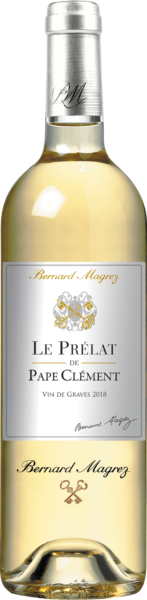
Le Prélat De Pape Clément Blanc
Appellation: AOC Graves
Terroir: The Prélat De Pape Clément’s vineyard is nestled in the heart of the Graves region, on the left bank of the Garonne River where the soil and the climate are ideal for grapes to ripen and vines to flourish. What’s more, the nearby river and the vineyard’s exposure to the sun help create a microclimate which helps protect and nurture the vines.
Soil: Dig down into the subsoil and you’ll find gravel and a layer of clay and limestone, which absorbs the sun’s heat during the day and releases it at night to produce remarkably full, ripe grapes.
Harvest: Mid-September
Grape Varieties: 71% Semillon, 16% Sauvignon Blanc, 12% Sauvignon Gris, 1% Muscadelle
Alcohol Content: 14%
Tasting Notes: Pretty pale gold color with shades of green. Fresh, fruity, balanced, and racy on the nose with a lovely minerality. It reveals notes of fresh apple, lemon, and more slightly ripe lemon, along with a hint of kumquat as well as very discreet hints of orange blossom. The palate is fruity, balanced, medium-bodied, with a mineral structure as well as a certain freshness. This wine expresses notes of fresh ripe lemon, and juicy peach fresh off the vine.
Château Pavie-Macquin
The Estate
Château Pavie Macquin owes its name to the grandfather of the current owners: Albert Macquin (1852-1911) to whom St-Emilion owes the use of the grafted plant, which was to save the vineyard ruined by phylloxera.
A 15 hectare family estate, the Pavie Macquin vineyard is beautifully situated on the highest plateau of Saint Emilion. The clay-limestone soil, on limestone rock with asteria, allows natural drainage and an exceptionally regular water supply. The clay in the soil gives the wine power, flesh, and generosity.
Château Pavie-Macquin Saint-Émilion 1er Grand Cru Classé
Production Area: 14 ha
Grape Varietals: 84% Merlot, 14% Cabernet Franc, 2% Cabernet Sauvignon
Plant Density: 6,600 vines / ha
Terroirs: Clay-limestone, on the limestone rock plateau with asteria
Average Age of the Vines: 35 years
Viticulture: Combination of traditional practices (plowing) and spontaneous natural grass cover. Continuous vineyard renewal program: uprooting, replanting, planting at higher densities. “Organic” control and phytotherapy in the vineyard. Many manual interventions: debudding, leaf stripping, thinning
Annual Production: Approx. 50,000 bottles (30 hl/ha – 85% Grand Vin)
Vinification: 4 successive sorting tables, destemming but no crushing. Gravity vatting of whole bunches and plot vinification in wooden (40%) and concrete vats. Alcoholic fermentation carried out by indigenous yeasts. Malolactic fermentation in barrels.
Aging: 16-20 months in barrels (60% new wood, 40% 1-year old barrels). Aging on the fine lees: 1st racking after 6-10 months of aging, 2nd one year later, before bottling. Bonding and filtration only if necessary.
Château Pédesclaux (Organic)
Overview
Just 45 years after the estate was founded, Pédesclaux saw its name carved in the stone of the 1855 classification. The status of fifth growth (‘Cinquième Cru’) it was awarded represented much more than a mere heritage – it also imposed stringent requirements for the future.
History
The château was founded in 1810 by winebroker Pierre Urbain Pédesclaux, who operated it with his wife until 1891, when the estate was sold to the Count de Gastebois. In 1930, Lucien Jugla became tenant, and eventually purchased the Château in 1950. In 2009, the estate was purchased by Jacky Lorenzetti, who also owns Chateau Lilian Ladouys in Saint-Estèphe and 50% of Château d’Issan in Margaux. Lorenzetti enlarged the vineyards with the purchase of 12 hectares of Medoc vines that are situated next to parcels owned by Chateau Lafite Rothschild and Chateau Mouton Rothschild.
The Terroir
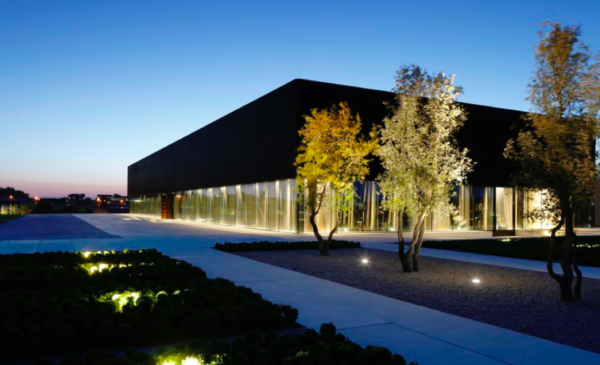 The vines of Pédesclaux sit upon a geological masterpiece whose origins date back 40 million years. It is this unique terroir, the Médoc par excellence, which was recognised by the 1855 classification. The Médoc’s exceptional geology was truly revealed to all during the 17th and 18th centuries. Europe and the world discovered that this terroir had a gift for producing wines of incomparable finesse. The great chateaus began to emerge, and with them the first attempts at classification. The 1855 classification is the most famous. Commissioned by the Chamber of Commerce for the Exposition Universelle in Paris, it differentiates between 61 red wine crus, 18 of which are in the Pauillac alone. It was drawn up by traders on the basis of the sales prices recorded in their archives. 160 years later, the 1855 classification still inspires dreams, as do the terroirs recognised at the time.
Acreage: 46 Ha (44 in Pauillac and 2 in the Haut-Médoc)
Grape Varietals: 47% Cabernet Sauvignon, 48% Merlot, 3% Petit Verdot, 2% Cabernet franc.
Planting density: 8.333-10.000 vines/Ha
Annual production: 8.000 cases
Soil: gravelly with seams of clay and limestone found at a greater depth.
Vinification
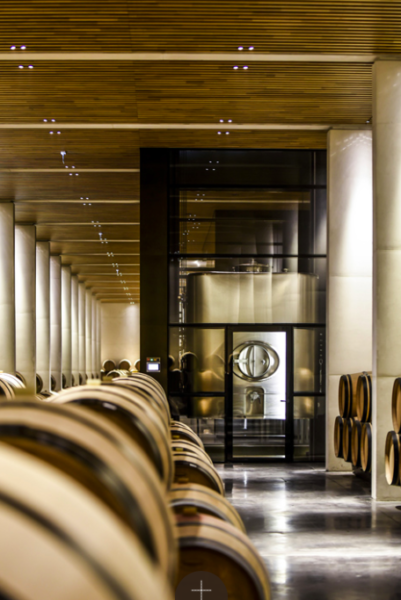
The fruit is hand-picked into small 8kg crates, with an unusual approach to harvesting introduced in the 2011 when the central vines within a plot were picked before the more peripheral vines. Continuing with the 2011 vintage, the fruit was placed in cold storage for 24 hours to reduce and even out the temperature, before it was then sorted manually, destemmed, sorted again and then vinified in nineteen thermo-regulated stainless steel cuves. The vats are filled by gravity without crushing, a process introduced with the 2009 vintage to protect the integrity of the fruit and enhance the quality of the extracted tannins. Thereafter the wine undergoes a cold maceration below 3ºC, followed by eight weeks of maceration during and after fermentation. There is punching-down to submerge the cap, and also délestage. Returning to the 2011 vintage as a typical example, the wine spends 14-16 months in oak, 60% new and 40% 1-year, with 20% of the malolactic fermentation occurring in barrel, in a climate-controlled barrel cellar renovated in 1998.
Wines and Production
The grand vin is Château Pédesclaux, and there is also a second wine until recently named Sens de Pédesclaux but rechristened Fleur de Pédesclaux in the 2007 vintage, and the total production is in the order of 8,000 cases. There is also a 2.6-hectare parcel planted with 60% Merlot and 40% Cabernet Sauvignon which is entitled only to the Haut-Médoc appellation, and is thus bottled as such, previously under the name La Rose de Pédesclaux but in more recent vintages this is labelled, rather more informatively, as Haut-Médoc de Pédesclaux.

Château Pédesclaux Pauillac Grand Cru Classé
Overview: Like the very best wines of its appellation, Château Pédesclaux reflects its complex terroir. Pédesclaux embodies the density of Pauillac tempered by a unique sensuality. Complexity, depth, sensuality, freshness and tension.
Production Area: 49 hectares
Terroir: Garonne gravel on subsoil of limestone
Vines: All work favorizing a good distribution and aeration of the grapes (disbudding, clipping, thinning out of leaves. Hand-picked sorting harvest according to the terroir, the vigorous zones and separation between stocks from the heart and the borders of our plots. Harvest in crates, followed by a manual sorting on clusters and then on berries.
Grape Varieties: 63% Cabernet Sauvignon, 27% Merlot, 7% Cabernet franc, 3% Petit Verdot (percentages vary depending on the vintage)
Average Age of the Vines: 35 years old
Average Yield: 38 Hl/Ha
Vinification: Gravitary vatting without pressing. Pre-fermentary cold maceration. Long vatting period. Gravitary vinification without pump.
Aging: 60% of new barrels; 16 months in barrels
Tasting Notes: Like the very best wines of its appellation, Château Pédesclaux reflects its complex terroir. Pédesclaux embodies the density of Pauillac tempered by a unique sensuality. Complexity, depth, sensuality, freshness and tension.
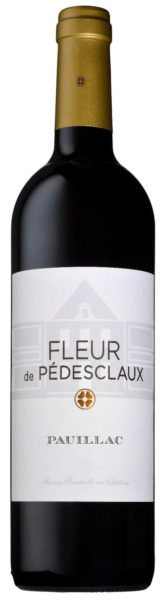
Fleur de Pédesclaux
Overview: Pédesclaux’s second wine is a flower which opens up as you approach. The wine’s higher proportion of Merlot gives it a tender and gentle style with an ample, silky structure. Its fruit aromas are intense, crisp and delicious. Fleur de Pédesclaux can be drunk in its very early years.
Production Area: 46.7 ha
Plantation Density: 8,500 to 10,000 vine stocks / ha
Average Age of the Vines: 35 years old
Terroir: Garonne gravel on limestone bedrock
Grape Varieties: 48% Merlot, 47% Cabernet Sauvignon, 3% Petit Verdot, 2% Cabernet Franc (percentages vary depending on the vintage)
Vines: All work favorizing a good distribution and aeration of the grapes (disbudding, clipping, thinning out of leaves)
Harvest: Hand-picked sorting harvest according to the terroir, the vigorous zones and separation between stocks from the heart and the borders of our plots. Harvest in crates, followed by a manual sorting on clusters and then on berries.
Vinification: Gravitary vatting without crushing. Prefermentary cold maceration. Long vatting period. Gravitary racks and returns
Aging: 16 months (10% new wood)
Château Phélan Ségur

The History
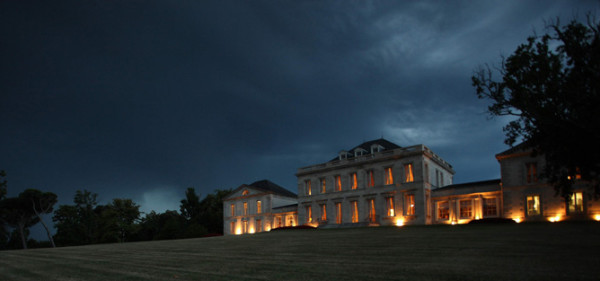
The story of Chateau Phélan-Ségur actually commences in Ireland in the 18th century. A young Irish wine merchant by the name of Bernard O’Phelan immigrated from Tipperary in southern Ireland to Bordeaux which ideally located for being a trading hub for the British Isles. Over time, the O’Phelan clan became deeply rooted in the region, and intermarriages between the Irish and French led to the expansion of the estate. In 1805, the Clos de Garramey, situated in Saint-Estèphe, was acquired, followed by the Ségur de Cabanac estate in 2010.
 After the passing of Bernard in 1841, the estate, then known as Château Ségur de Garramey, was passed on to his son Frank, who embodied the union of the two disparate cultures–he was an Irishman through and through but also a médocain at heart. His goal was to dedicate his life to ensuring the legacy of the estate, and to improve the quality of the property’s wines. Later on, he became mayor of Saint-Estèphe and remained in that post for thirty years. He rose within the Irish community in Bordeaux, which included among others the Johnston, Barton, Clarke, and Lynch clans.
At the beginning of the 20th century, Château Ségur de Garramey took on its present name: Château Phelan Ségur.
More recently, the estate passed into the hands of the Gardinier family in 1985. Under their supervision, the château was renovated to give it back its former splendor and to provide it with modern technology. Led by Xavier Gardinier, formerly of Pommery and Lanson, the vineyards were restructured and replanted with the greatest respect for the the terroir. He was one of the pioneers in the region when it came to using integrated farming, and emphasized a return to working the soil.
Today, the winery is managed by Xavier’s three sons, Thierry, Stéphane, and Laurent, with the help of Luc Peyronnet (vineyard manager), and Fabrice Bacquey (cellar master). They have continued to uphold and improve the fine winemaking tradition of Phelan Ségur into the 21st century.
Location
The Vines
The Climate
The Soil
The Harvest
Vinification
Aging
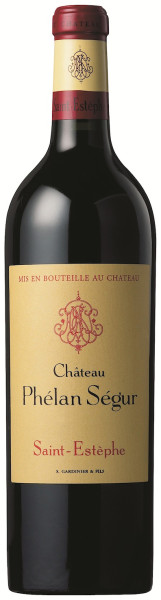
Château Phélan-Ségur Saint-Estèphe
Grape Varieties: 60% Cabernet-Sauvignon; 40% Merlot
Soil: Gravelly clay over chalky bedrock
The Vines: Double guyot pruning; sustainable pest management. Selective elimination of buds; thinning of fruit-leaf removal.
Harvest: Manual; grapes are sorted in the vineyard and the cellar.
Vinification: Vinification lasts 20-30 days in stainless steel vats. Temperatures are regulated for alcoholic fermentation at 25-30C. Malolactic fermentation takes place in maximum 50% new French oak barrels
Aging: In French oak barrels for 12-18 months
Annual Production: 20,000 cases
Food Pairings: Red meat with strong flavors (lamb, pigeon, ostrich)
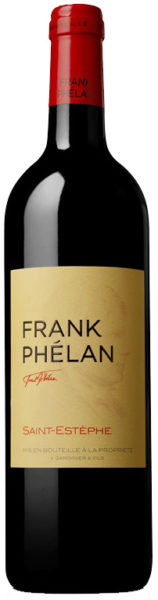
Frank Phélan Saint-Estèphe
Overview: Frank Phélan, the second wine of Chateau Phélan Ségur, was first made in 1986. It bears the name of Bernard O’Phelan’s son–Frank Phélan. He was a man of character, a mayor of Saint-Estéphe for 30 years, and like him, this wine grows in its own terroir, maintaining its identity and specific quality, vintage after vintage.
The Vineyard: Frank Phélan is produced from 15 ha of old vines and a selection of younger vines (less than ten years). It respects the classic values of the Château by expressing another facet of the terroir upon which Chateau Phélan-Ségur is situated.
Grape Varieties: 50% Cabernet Sauvignon; 50% Merlot
Vinification & Aging: Frank Phélan benefits from the same care and attention as Phélan Ségur in the vineyard at harvest time, and when actually made, the aim is to develop a powerful yet well-balanced wine. Maturation lasts for 14 months.
Annual Production: 12,000 cases
Tasting Notes: Ruby red color with great depth. The bouquet is full of indulgent red fruit, cinnamon, and coffee. These precise aromas suggest great finesse on the palate. Intense and compelling, with an elegant structure of silky tannins. Its roundness and suppleness allow it to be enjoyed from a young age.
Château Pichon Baron
 Overview
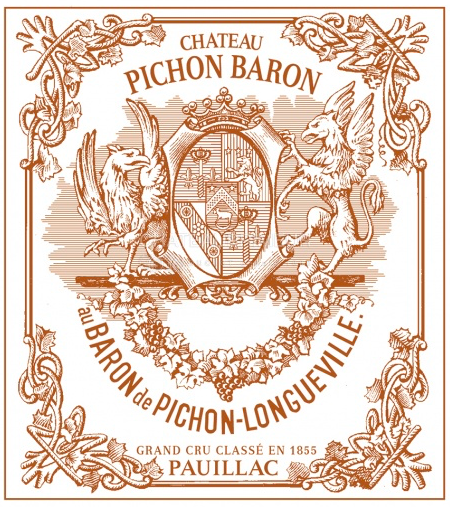
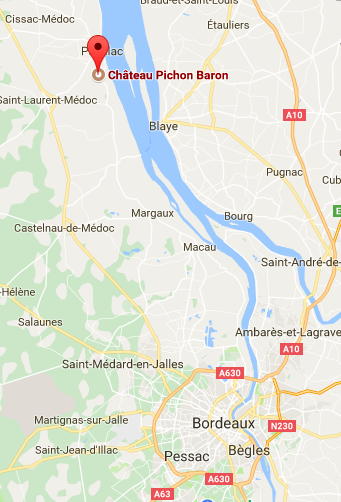 Château Pichon Longueville Baron or Château Longueville au Baron de Pichon-Longueville (commonly referred to as Pichon Baron) is a winery in the Pauillac appellation of the Bordeaux region of France. Château Pichon Longueville Baron is also the name of the red wine produced by this property. The wine produced here was classified as one of fifteen Deuxièmes Crus (Second Growths) in the original Bordeaux Wine Official Classification of 1855.
History
The estate was founded in the late 17th Century. This period was known as the Grand Siècle, or “great century”, in reference to Louis XIV’s 1661 accession to the French throne. In 1850 the property was divided in two. Baron Raoul Pichon de Longueville’s section became the Pichon Baron estate. The second section, belonging to his three sisters, became Pichon Comtesse.
Baron Raoul was proud of his prestigious property, and in 1851 he commissioned the imposing château inspired by Renaissance architecture that we know today. This uniquely charming and romantic château, with its two emblematic turrets, has stood proudly at the vineyard’s heart ever since.
During the Universal Exhibition of 1855, the wine was classed as a Second Grand Cru Classé according to the ranking system requested by Emperor Napoleon III, who wished to showcase Bordeaux’s great wines.
In 1933 the Pichon de Longueville family sold the property to the Bouteiller family, who managed Château Pichon Baron for over 50 years.
The Terroir
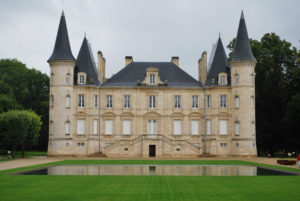 Pauillac, a Médoc appellation, is located approximately 40 kilometres to the north of Bordeaux, on the left bank of the Gironde River.
The land, which features quaternary gravel deposits and the large pebbles and sand which are typical of the appellation, is a winemaking paradise. The subsoil composition allows the retention of water to feed the roots, while the undulating relief of the gravel soils is ideal for drainage.
This exceptional terroir has a maritime climate; its proximity to the Gironde estuary lends it an increased mildness. All the right conditions come together to make the Pauillac appellation the most prestigious of Bordeaux wines.
The Pichon Baron estate comprises 73 hectares of high quality gravelly soil. Low in nutrients and with little excess water, this unique soil sparingly nourishes the vines, whose average age is 35 years.
The estate is actively committed to protecting the environment to safeguard this exceptional legacy for future generations. The Pichon Baron team is dedicated to producing consistently exceptional wines that are faithful to the spirit of this great terroir. A very strict selection from the older vines on the noblest soils is dedicated to the production of Château Pichon Baron, the Grand Vin of the property, of which the number of bottles is limited in order to produce only the best.
Pichon Baron’s vineyard is planted as follows: 65% Cabernet-Sauvignon, 30% Merlot, 3% Cabernet Franc and 2% Petit Verdot, and is meticulously divided into separate plots. Each plot receives specific care and attention adapted to its particular profile.
The terroir’s best land – the “Butte de Pichon Baron” – is devoted entirely to the production of the Grand Vin, making up the majority of the blend. It is among the estate’s historic plots; it was already in use in 1694, when the wine was first produced.
Pichon Baron also produces two second wines, from other parcels of its vineyard: Les Tourelles de Longueville and Les Griffons de Pichon Baron.
Planting density: 9.000 vines/Ha
Vinification
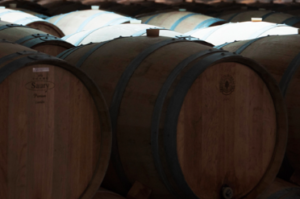 Upon arrival at the winemaking facilities, the grapes are placed in vats. Vinification is a key stage which continues the winegrower’s work and reveals the wine’s individual characteristics.
Vinification comprises a complex maceration process of grape skins and pulp.
Fermentation transforms the sugars into alcohol, breaking down the tannins and colours, and drawing out the wine’s aromatic components. Maturation lasts between three and four weeks. A wine’s success depends on the monitoring of the process – on a daily basis – for each vat.
When the wine’s malolactic fermentation is complete, the wine reaches a natural state of equilibrium. The vats are emptied and select portions of the wine are put into barrels.
The wine is aged in barrels in the semi-darkness of the cellars. It is racked every three to four months, using the traditional candle method, to separate the wine from the lees. Parcel selection produces a remarkably diverse range of wine profiles. It is this variety that gives the final blends their richness and sophistication. To produce a successful blend, over 40 different wines are tasted in a series of strictly-controlled tastings. Blending is a highly complex procedure which changes from one year to the next, giving each vintage its distinctive character.
Upon removal from the vats, the best batches are set aside to make Château Pichon Baron’s Grand Vin. Most are initially aged in new barrels made from the finest French oak. Three months later they are tasted again, and the final blend is assembled.
The wine slowly adjusts during barrel ageing, which lasts for 18 to 20 months.
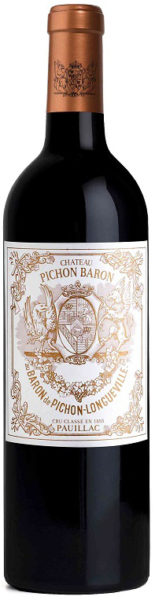
Château Pichon Baron Pauillac Grand Cru Classé
Overview: The Grand Vin Château Pichon Baron, classified as a 2nd Grand Cru Classé in 1855, is made with grapes from the oldest vines on the estate’s historic plots. This quintessential Pauillac offers an intense and profound sensory experience of great complexity. Château Pichon Baron exhibits elegance, intensity and exceptional length on the palate. It is a wine that improves year after year and can age for over 40 years in the cellar.
Grape Varieties: Cabernet Sauvignon, Merlot (percentages vary depending on the vintage)
Aging: 80% from new barrels, 20% from barrels of one vintage for 20 months
Tasting Notes: The color of Château Pichon Baron is intense deep garnet red. The nose is expressive and delicate, offering a wonderfully aromatic range of summer berries, black cherries and blueberries, very lightly underpinned by a toasted spiciness. The attack is mellow and the palate, like the nose, is precise and refined. Well-integrated woodiness and delicate, velvety tannins carried by ripe and generous fruit. The finish is juicy and precise. There is overall opulence and denseness from start to finish. This wine is harmonious, with an impressive balance between the fruit and the delicate tannins.
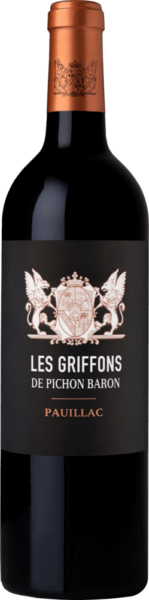
Les Griffons de Pichon Baron
Overview: Les Griffons de Pichon Baron is one of the second wines of the property. First created with the 2012 vintage, it has a pure and direct character. The grapes which make up this wine’s blend come primarily from gravelly plots of land near the Gironde estuary, a good environment for Cabernet-Sauvignon. Les Griffons offers a vigorous and fresh tasting experience, full-bodied and clean, overflowing with energy.
Grape Varieties: 52% Cabernet-Sauvignon, 48% Merlot
Aging: 60% in new barrels, 40% from barrels of one vintage for 18 months
Cellaring: It can be kept for over 20 years or enjoyed right away.
Tasting Notes: Les Griffons de Pichon Baron reveals a deep, almost black color. The nose is delicate, with notes of black fruits and a hint of subtle, well-integrated wood. The palate is generous and full, with powerful and luscious tannins. The balance is rich and harmonious with tension. The finish is racy and refreshingly long. A wine for cellaring, which reflects the terroir and expresses the year’s full potential.
Château Pichon Longueville Comtesse de Lalande
The Estate
The estate consists of different plots of land that make up the vineyard surround the chateau, which inclide: Ardileys, Moulin Riche, Longueville, Grand’Plante, la Chapelle, Virginie, Sophie and Marie-Joséphine. The 89 hectares of vines, close to the river, straddle the Saint-Julien stream towards the Léoville plateau and onto the Pichon Longueville plateau to the south of the Pauillac appellation.
The Vines
The vines are 45% Cabernet Sauvignon, 35% Merlot, an impressive 12% Cabernet Franc and 8% Petit Verdot. Today with more reliable warmth and better ripening conditions through the growing season in most vintages, Cabernet Sauvignon is fairing better and Merlot worse, and the wine of Pichon-Lalande tends to feature a much higher percentage of Cabernet Sauvignon than the 45% found in the vineyard.
The Soil
With particular reference to the central core of vineyards which constitutes the greatest part of the grand vin, underfoot the soils are typical Gunzian gravels over a deeper clay and some very deep limestone and sandstone.
Vinification
The fruit is harvested by hand usually by a team of workers who travel over from Andalusia every year, before being destemmed and crushed, and then fermented in a selection of 33 temperature-controlled stainless steel vats, with a cuvaison usually lasting between 18 and 24 days during which the cap is submerged by pumping over. As the year draws to a close, the Pichon team earmark the wines for the grand vin, Château Pichon-Longueville, Comtesse de Lalande or the second wine, Réserve de la Comtesse. The latter may account typically for 20-50% of the entire production, and in addition some wines, particularly those from young vines, are excluded completely. The grand vin goes into Allier and Nièvre oak, 50% new each vintage, for a period of up to 18 months, the second wine sees 25% new oak. There is a racking every three months, and a fining with egg white prior to bottling usually during the month of June two years after the harvest.
The Wines
The grand vin is Château Pichon-Longueville, Comtesse de Lalande. The second wine is Réserve de la Comtesse, which accounts for about 20-50% of the entire production.
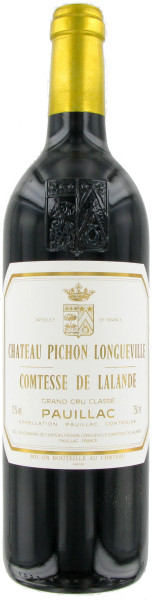
Château Pichon Longueville Comtesse de Lalande Pauillac 2nd Growth
Overview: The unique encepagement and the 12 hectares of vines situated on the soils of St. Julien endow the wines of Château Pichon Longueville Comtesse de Lalande with an exceptional personality compared with the other crus of the Pauillac appellation. Complexity, elegance and longevity are the hallmarks of this race, they are found every year during the creation of the vintages.The nose is distinguished by a bouquet of aromas, mixing blackcurrant and violet, vanilla and cinnamon. In the palate, the tannins appear mature and melted, revealing a strong and affirmed structure, a surprising suppleness, perfect harmony and long persistency. The wine is seductive when young without prejudicing its longevity.
Grape Varieties: Cabernet Sauvignon; Merlot; Cabernet Franc; Cabernet Franc (varying percentages dependent on the vintage)
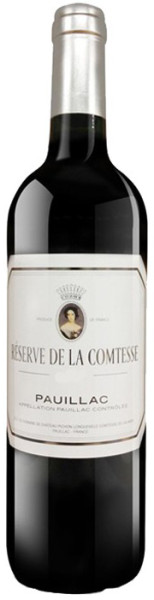
Réserve de la Comtesse
Overview: The Réserve de la Comtesse is the second wine of Château Pichon Longueville Comtesse de Lalande. Today, the second wine represents between 20-50% of the total production of the Chateau. Planted in the same soil, the second wine benefits from the same technology as the first wine, and also its reputation. They are generally excellent wines, though less robust and long lasting than their elders.
First Vintage: 1973
Soil: Gunzian gravels over a deeper clay and some very deep limestone and sandstone.
Grape Varieties: Cabernet Sauvignon; Merlot; Cabernet Franc; Cabernet Franc
Harvest: The fruit is harvested by hand usually by a team of workers who travel over from Andalusia every year.
Vinification: The grapes are destemmed and crushed, then fermented in a selection of 33 temperature-controlled stainless steel vats, with a cuvaison usually lasting between 18-24 days during which the cap is submerged by pumping over. As the year draws to a close, the Pichon team earmarks the wines for the Grand Vin, Château Pichon-Longueville Comtesse de Lalande, or the second wine, Réserve de la Comtesse. The latter may account typically for 20-50% of the entire production, and in addition some wines, particularly those from young vines, are excluded completely.
Aging: The grand vin goes into Allier and Nièvre oak, 50% new each vintage, for a period of up to 18 months, the second wine sees 25% new oak. There is a racking every three months, and a fining with egg white prior to bottling usually during the month of June two years after the harvest.
Château Pied d’Argent
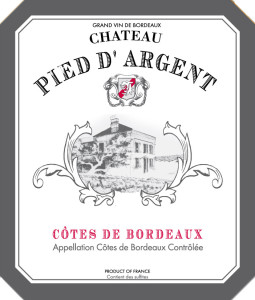
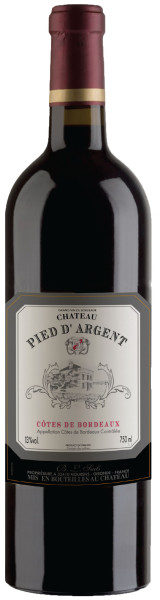
Côtes de Bordeaux
Overview: For 4 generations, the Suils family has found the right balance between traditional and modern wine making techniques to craft their exceptional wines. From the culture of the vineyards to the elaboration of the wine, Mr. and Ms. Suils are always on the spot to ensure the quality of the resulting wine.
Location: The vineyards look down upon the slopes of the Garonne; the richness of the soil lends the wine a perfect amalgam of strength and generosity.
Grape Varietals: 55% Merlot, 20% Cabernet Sauvignon, 20% Cabernet Franc, 5% Malbec
Vinification: Rigorous temperature control is maintained during the fermentation and maceration processes. The wine is bottled 18 months after the harvest.
Tasting Notes: On the palate, the Pied d’Argent is finely textured, composed of soft & silky tannins; notes of cacao, spices, and cherries dominate with a long, intense finish.
Château Pontet-Canet (Biodynamic)
The Estate
Jean-François de Pontet, royal governor of the Médoc, combined several vineyard plots in Pauillac in the early 18th century. Years later, his descendants added neighboring vines in a place named Canet. This was the beginning of one of the largest estates in the Médoc, which quite naturally added the name of its founder to that of the land registry reference.
A century later, Pontet-Canet was included in the famous 1855 classification, thereby confirming its membership among the elite of the Médoc. This privileged position did not go unnoticed by one of the most important Bordeaux shippers of the time, Herman Cruse, who bought the estate in 1865. He built new cellars, modernized the wine making facilities, and established the wine’s reputation around the world. The Cruse family owned Pontet-Canet for 110 years, until another shipper (from Cognac this time), Guy Tesseron, acquired it in 1975.
Château Pontet-Canet Pauillac Grand Cru Classé
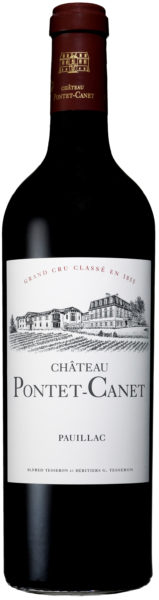
Surface Area: 120 hectares, of which 81 under vines
Soil: Quaternary gravel
Grape Varieties: Cabernet Sauvignon 62%, Merlot 32%, Cabernet Franc 4%, Petit Verdot 2%
Average Age of the Vines: 40-45 years
Viticulture: Certified organic and biodynamic
Plantation Density: 9,500 vines per hectare
Fertilizer: composted manure (if needed)
Pruning: Double Guyot, Médocain style
Harvest: By hand in small crates
Château Potensac
The Estate
The vineyards of Potensac are located in Ordonnac, in the Médoc appellation, and incorporate the vines of three properties managed as a single entity, these being Potensac, Gallais-Bellevue and Lassalle. The terroir has the familiar alluvial gravel of the left bank with some red clay, and the vines cover about 53 hectares in all, located between St-Yzans and St-Germain-d’Esteuil.
The Vines
During recent decades the vineyard has been slightly dominated by Cabernet Sauvignon which accounts for about 60% of the vines, with approximately 25% Merlot and 15% Cabernet Franc in addition, planted at an average 8,000 vines/ha. But with the purchase of new Merlot vines there is naturally a swing towards this variety, and it is notable that the 2005 vintage included more Merlot than Cabernet (41% Merlot, 40% Cabernet Sauvignon, 19% Cabernet Franc) in the final blend.
Vinification
Yields are restricted to approximately 35 hl/ha, and once harvested by hand the fruit is fermented at a maximum temperature of 28ºC in stainless steels and concrete vats, with 15 to 18 days maceration and constant pumping over. There is a rigorous selection for the grand vin Château Potensac, with about 40-45% of the crop going to the second wine, which today is bottled as La Chapelle de Potensac, although Château Lassalle has also been used as a second label in the past. Potensac will see up to 16 months in those aforementioned oak barrels, before an egg white fining and then bottling without filtration.
Wines and Production
The grand vin is Château Potensac and the second vine is La Chapelle de Potensac. The total production is about 25,000 cases per year.
Château Potensac Médoc
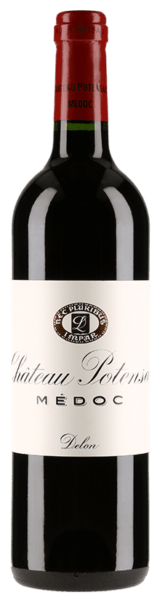
Overview: The estate’s Grand Vin vineyards are located west of Ordonnac village. Its rows of vines grow on a double thalweg of gravelly-clay. They produce a very fine wine with tight texture, great richness and wonderful freshness. On the palate, the wine is pure and powerful, the tannins dense and spicy, and the finish of great depth with glorious aromas. Because of these qualities, Château Potensac is often considered to represent the “pure Medoc style”. It should be noted that Potensac was the only “Cru Bourgeois Exceptionnel” of its appellation.
Appellation: Médoc
Terroir: Château Potensac’s vineyards extend mainly over hilly mounds with a limestone subsoil covered with clay and gravel outcrops containing a high proportion of gravel (“graves”). These limestone soils are very similar to those found in the Saint-Estèphe appellation. On this very special terroir, some plots of Cabernet Sauvignon and Cabernet Franc planted over 80 years ago still produce perfectly ripe, healthy grapes. The hamlet of Potensac was already cited in the first edition of Féret for the special characteristics and longevity of its wines.
Production Area: 84 hectares
Average Age of the Vines: 38 years old
Grape Varieties: Merlot, Cabernet Sauvignon, Cabernet Franc, Petit Verdot
Plant Density: 7,700 vines/hectare
Chapelle de Potensac
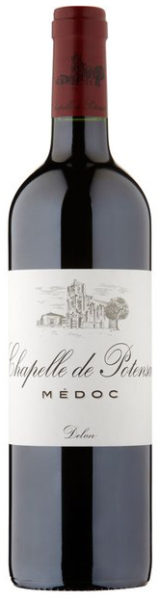
Overview: Chapelle de Potensac was created and first sold by Jean-Hubert Delon with the 2002 vintage. This elegant, traditionally made second wine possesses beautiful balance founded on smoothness and freshness. Its terroir of fine gravel and clay sands can be found in various parts of Potensac’s historical terroir, on the edge of the village. The Chapel, reproduced on the bottle’s packaging, stands in the center of the hamlet. It is characterized by the absence of its Neo-Gothic tower.
Appellation: Médoc
Production Area: 84 hectares
Average Age of the Vines: 38 years old
Grape Varieties: Merlot 49.6%, Cabernet Sauvignon 33.7%, Cabernet Franc 15.7%, Petit Verdot 0.9%
Plant Density: 7,700 vines/hectare
Château Poujeaux (Sustainable)
The Estate
The name “Château Poujeaux” first appeared in 1806 but Terre de Poujeaux, situated in Moulis-en-Médoc, had existed since the Middle Ages. At that time, it belonged to Latour Saint Mambert, now Château Latour, 1er Grand Cru Classé, Pauillac. During the 19th century, the estate produced its first wines and became truly independent.
Previously divided up into three entities, it was only at the end of the 20th century and thanks to the Theil family that Poujeaux’s structure and size were restored. The estate regained its historic form in 1956, unified with 100 hectares of which 70 hectares were under vine. In 2008, the estate was acquired by the Cuvelier family, already owners of the famous Clos Fourtet, 1er Grand Cru Classé, Saint-Émilion.
Château Poujeaux is set upon the magnificent gravel slopes of Grand-Poujeaux, a single unbroken parcel of land to the northeast of Moulis. Cabernet Sauvignon (50%) and Merlot (40%), the Médoc’s most famous grape varieties, are planted alongside Petit Verdot (5%) and Cabernet Franc (5%). The soil types and grape varieties are perfectly matched, giving rich, elegant wines.
The roundness and charm of Merlot is counterbalanced by the tension and energy of Cabernet Sauvignon. Petit Verdot, despite making up a small proportion of the blend, brings powerful structure and a rich aromatic palate. Finally, Cabernet Franc offers added complexity. Rigor and vigilance are keystones in a constant search for the optimal expression of this precious terroir.
Team
Won over by the quality of the wines and recognizing the potential of the terroir, the Cuvelier family have brought a decidedly modern touch to Poujeaux, raising its profile to place it among the best loved fine wines of Bordeaux.
Today, Matthieu Cuvelier and Christophe Labenne co-manage Château Poujeaux with enthusiasm and a determination to perpetuate and transmit Château Poujeaux’s family and team spirit. The vineyard and winery teams follow the technical advice given by Stéphane Derenoncourt, driven by passion and experience.
- Owner: Famille Philippe Cuvelier
- Manager: Matthieu Cuvelier
- Director: Christophe Labenne
- Vineyard Manager: Stéphane Dubrulle
- Cellar Master: Daniel Bercion
- Consulting Oenologue: Stéphane Derenoncourt
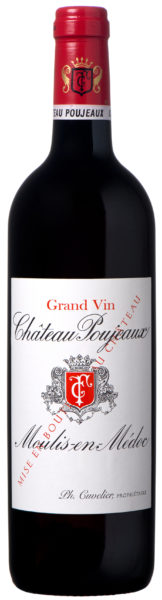
Château Poujeaux Moulis-en-Médoc
Appellation: Moulis-en-Medoc
Soil: Gravel
Average Age of the Vines: 35 years old
Grape Varieties: 50% Cabernet Sauvignon, 40% Merlot, 5% Petit Verdot, 5% Cabernet Franc
Viticulture: The plots of vines are tended with great care through every season of the year. The 70-hectare vineyard is managed with sustainable agriculture techniques and tilling of the soils. Care for the earth is paramount. Grapes are the center of every preoccupation. From de-leafing, disbudding, and green harvesting to choosing the harvest dates, selection, and sorting, every process is respectful of the fruit.
Harvest: Harvest time is the culmination of a year’s work, generally beginning in mid-September and ending in mid-October. Each plot is picked by hand at optimal maturity, determined with the help of technical analysis and tasting of the grapes. The cut grapes are sorted then transferred to the winery.
Vinification: The fruit is separated according to the age of the vines, vineyard location, and grape variety in order to obtain separate batches with complimentary characteristics. After a month of alcoholic and malolactic fermentation in vat, aging takes place in French oak barrels over 12 months.
Blending: Blending demands rigor, concentration, and sensitivity. The work involves associating, dissociating, and tasting to give life to a new vintage that remains faithful to the spirit of Poujeaux.
The Grand Vin, Château Poujeaux, unites the qualities of elegance, depth and balance.
Annual Production: 250,000 bottles
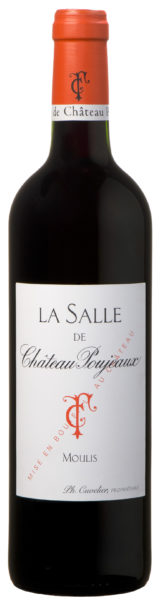
La Salle de Chateau Poujeaux
Overview: Salle de Poujeaux, the second wine of Château Poujeaux is distinguished by an audacious blending process that brings together the delicacy of crisp, fresh fruit with the richness of riper fruit. Its supple tannins make it seductive from a very young age. 80,000 bottles are produced each year.
Appellation: Moulis-en-Medoc
Soil: Garonnes gravel of Günz
Plantation Density: 10,000 plants/hectare
Average Age of the Vines: 15 years old
Annual Production: 80,000 bottles
Training: Double Guyot
Grape Varieties: 52% Merlot, 37% Cabernet Sauvignon, 11% Cabernet Franc
Vinification: Fermentation for 20-25 days in concrete tanks and stainless steel with regular pumping
Aging: 12 months in French oak barrels