

Château Taussin Marssot
The Estate
Château Taussin Marssot is one of 6 chateaux owned by Famille Rochet.
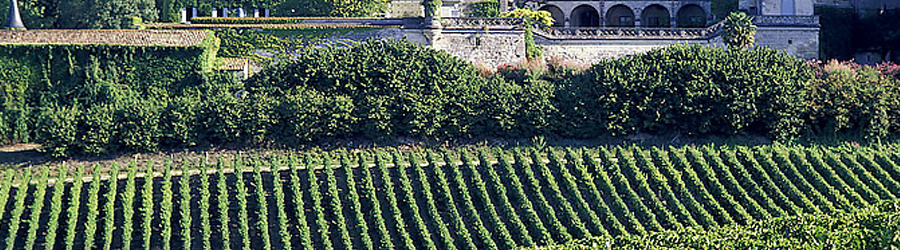
It all started in 1865 with an exceptional couple, Jacques and Françoise Rochet. This duo bought a property between Dordogne and Garonne, recognized for the richness of its soils and its exceptional terroir (formerly owned by the Benedictines of the medieval city of La Réole). They operate and build their family history around 3 founding values: work, adaptability, and openness to the world. Thanks to the transmission of their know-how and their family values, generations of winegrowers succeed one another, and the estate now has 6 chateaux on more than 100 hectares.
Concerned with preserving and transmitting the quality of the vineyard to their children, the Rochet family has chosen to adopt reasoned agriculture, more respectful of the environment, thus allowing the production of quality wines while participating in the improvement of the economic and social fabric of the rural world. Their goal is to offer an alliance between satisfaction and pleasure, from the human hand to the tasting of their authentic wines, and faithful to the values of the Bordeaux vineyard.
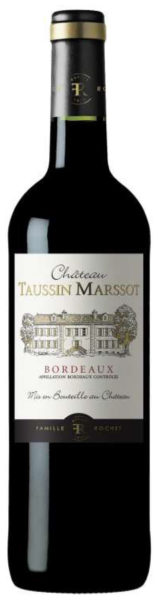
Château Taussin Marssot Bordeaux
Grapes: Merlot, Cabernet Sauvignon
Vinification: Traditional wine making process in thermo-regulated stainless steel vats. Maceration at 8°C during 5 days. Alcoholic fermentation during 15 days at 25°C.
Tasting Notes: Its ruby-red color still conserves the purple notes of its youth. Red fruit and berries come together to create the freshness of its flavor. The first impression in the mouth is a marked fruity flavor with cherry notes typical of Merlots, which give way to smooth tannins enveloped in its long finish.
Food Pairings: Pairs well with roasted vegetables, and is fantastic with barbecued meats as well!
Clos Fourtet
The Estate
Clos Fourtet owes its initial reputation to the Rulleau and Carles families, Lords of Figeac. In the 18th century, they were the first to make the most of this land with only a thin layer of arable soil, but blessed with outstanding natural drainage. Clos Fourtet has abundantly proved its standing as a Premier Grand Cru Classé, helped in this respect by hard work and major investments by the Cuvelier family, owners since 2001.
Located atop the limestone plateau well-known for producing some of the greatest wines in Saint-Émilion, Clos Fourtet has one of the appellation’s best and most famous terroirs.
The vines, located in a single block a stone’s throw from the medieval village, grow atop impressive underground quarries.
Winemaking is very traditional, but complemented by the most up-to-date techniques. In keeping with Clos Fourtet’s inherently strong personality, it is aged entirely in new oak barrels. The wine is extremely elegant, with incomparable minerality and freshness.
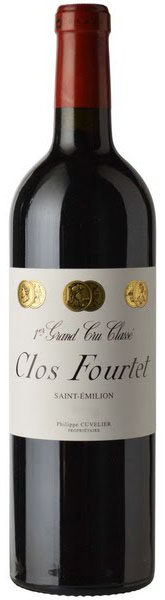
Clos Fourtet Premier Grand Cru Classé Saint-Émilion
Owner: Philippe Cuvelier
Manager: Matthieu Cuvelier
Appellation: Saint-Émilion – 1er Grand Cru Classé
Situation: Set upon the highest slope of western Saint-Émilion
Production Area: 19 hectares
Soil: Limestone and clay
Grape Varieties: 85% Merlot, 10% Cabernet Franc, 5% Cabernet Sauvignon (percentages vary depending on the vintage)
Plant Density: 6,000 vines / hectare
Average Age of Vines: 25 years
Oenologists: Jean-Claude Berrouet and Stéphane Derenoncourt
Harvesting: By hand, using small baskets
Sorting: By hand and optical sorting machine
Vinification: Whole grape fermentation in 25 thermo-regulated stainless steel vats of small capacity. Manual extraction using the ‘pumping down’ technique to preserve a maximum of optimal raw material. 25-30 days in vats. Malolactic fermentation in barrel.
Aging: 60-80% new oak barrels for 14-18 months in underground caves
Production: 2,500-4,000 cases of Grand Vin
Domaine de Baronarques (Sustainable)
The Estate
Domaine de Baronarques is a very old estate, dating back at least to the 17th Century, when it was called Domaine de Lambert. At the time, the estate belonged to the Abbey of Saint-Polycarpe, a village near Limoux in the Aude department of Southern France.After changing hands several times, the estate was sold to Michel Tisseyre in 1875. The Tisseyre family extended the vineyard – it covered 48 hectares (120 acres) in 1910 – and between 1890 and 1900 built themselves an attractive residence with a terrace and a garden.
In 1998 Mr. Chéreau, a Marseilles lawyer and heir of the estate, sold it to Baroness Philippine de Rothschild and her two sons. The three entrusted the management of the Domaine to the family company, Baron Philippe de Rothschild S.A. The estate was very run down, calling for extensive renovation of the vineyard and the winemaking facilities, a process that took five years.
In 2003, Domaine de Baronarques benefited from a fortunate conjunction of circumstances: the wine proved to be of very high quality and the Domaine was awarded the AOC Limoux rouge appellation, newly created by the Institut National des Appellations d’Origine (INAO). Domaine de Baronarques could take its rightful place alongside the family’s other estates, including the illustrious Château Mouton Rothschild.
Camille Sereys de Rothschild joined the original buyers, Philippe Sereys de Rothschild and Julien de Beaumarchais de Rothschild, her brothers, in 2014.
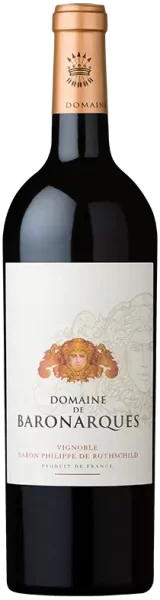
Domaine de Baronarques Limoux Rouge
Location: Domaine de Baronarques is located in Languedoc, in the commune of Saint-Polycarpe, near Limoux. The Domaine is a single 110-hectare (272-acre) estate, 43 hectares (106 acres) of which are planted with vines.
Climate: Located 400 km from the Atlantic Ocean and 100 km from the Mediterranean, the vineyard is subject to the climatic influence of both water masses, ensuring optimum sunshine and balanced rainfall. Also close to the Pyrenees, the parcels are at an altitude of 250 to 350 meters, tempering the summer heat.
Soil: The soil is mainly clay and limestone, except for a few parcels where there is more gravel and sand.
Grape Varieties: The vineyard is planted with 70% Bordeaux varieties (Merlot, Cabernet Sauvignon, Cabernet Franc) and 30% Mediterranean varieties (Syrah, Grenache and Malbec) for the red wines and 100% Chardonnay for the white wine.
Vine Density: Seeking the best possible quality, Domaine de Baronarques has opted for high-density planting: 7,500 plants per hectare on 10 hectares (25 acres) of the estate and 4,600 plants per hectare on the other parcels (most vineyards in the region are planted with a density of around 3,000 plants per hectare).
Viticulture: The vineyard practices at the Rothschild family’s other estates (disbudding, leaf removal, cluster thinning) are well-suited to the Domaine’s different types of soil, microclimates and grape varieties.
Harvest: The grapes are harvested by hand in 12-kilo open baskets, as in the family’s Bordeaux vineyards.
Vinification: The grapes are sorted above the vat room and fed into the vats by gravity, a process which helps to keep the fruit whole. They are then gently destemmed and lightly crushed, and fermented in stainless steel vats. Alcoholic fermentation lasts about 8 days at a maximum temperature of 30°C. It is followed by a maceration period lasting 2-4 weeks depending on the wines and the grape varieties.
Aging: After malolactic fermentation, the premium red wine is matured for 12 months in oak barrels, either new (25-50% depending on the vintage) or one to three years old.
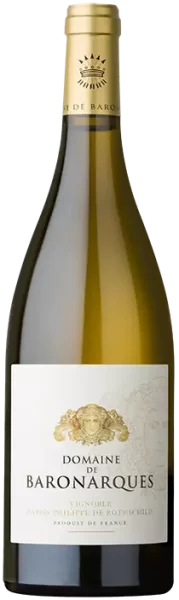
Domaine de Baronarques Limoux Blanc
Location: Domaine de Baronarques is located in Languedoc, in the commune of Saint-Polycarpe, near Limoux. The Domaine is a single 110-hectare (272-acre) estate, 43 hectares (106 acres) of which are planted with vines.
Climate: Located 400 km from the Atlantic Ocean and 100 km from the Mediterranean, the vineyard is subject to the climatic influence of both water masses, ensuring optimum sunshine and balanced rainfall. Also close to the Pyrenees, the parcels are at an altitude of 250 to 350 meters, tempering the summer heat.
Soil: The soil is mainly clay and limestone, except for a few parcels where there is more gravel and sand.
Grape Variety: 100% Chardonnay
Vine Density: Seeking the best possible quality, Domaine de Baronarques has opted for high-density planting: 7,500 plants per hectare on 10 hectares (25 acres) of the estate and 4,600 plants per hectare on the other parcels (most vineyards in the region are planted with a density of around 3,000 plants per hectare).
Viticulture: The vineyard practices at the Rothschild family’s other estates (disbudding, leaf removal, cluster thinning) are well-suited to the Domaine’s different types of soil, microclimates and grape varieties.
Harvest: The grapes are harvested by hand in 12-kilo open baskets, as in the family’s Bordeaux vineyards.
Vinification: After direct pressing or cold maceration on the skins, the grapes are fermented and the wine is matured in oak barrels for a total of nine months.
The three wines are bottled at the estate or, as they would say in Bordeaux, “mis en bouteilles au château”.
Produced and vinified in the great Bordeaux winemaking tradition, the wines from Domaine de Baronarques set the standard for France’s Languedoc region.
Tasting Notes: The wine has a clear, glittering color with a greenish tint. The refined and complex nose reveals pear and white blossom aromas mingled with elegant, judicious oak that brings vanilla, toast and spice notes.
From a full and well-balanced attack, the mid-palate yields tree fruit and white pepper flavors together with touches of hawthorn set off by a succulent, smooth and opulent body, leading into an intensely flavored and beautifully fresh finish.
Domaine de Chevalier
The Estate
Domaine de Chevalier is located in Léognan, the capital of the Graves region. It dates as far back as 1783, when it appeared on the famous map of Pierre de Belleyme. In 1983, the estate was purchased by the Bernard Family, number one in France in the spirits market and a major négociant of premium Bordeaux wines. It has been run ever since by Olivier Bernard who perpetuates that spirit of balance and the constant drive for perfection which have been the hallmark of this outstanding wine. The Domaine de Chevalier Rouge, the flagship of the Pessac-Léognan appellation, belongs to the elite of the great classified growths of Bordeaux. The Domaine de Chevalier Blanc is recognized as one of the world’s finest dry wines.
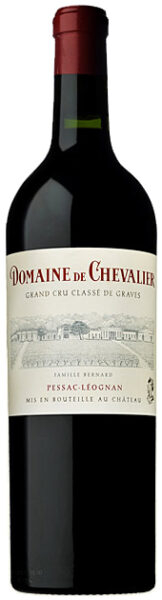
Domaine de Chevalier Pessac-Léognan
Appellation: Pessac-Léognan
Soil: Gravel on clay-gravel subsoil
Production Area: White wine-5 hectares; Red wine-45 hectares
Average Production: White-18,000 bottles; Red-100,000 bottles
Harvest: Hand-picked into small crates. The grapes are carefully sorted in the vineyard as well as before and after destemming.
Vinification: 2 vat-rooms, one with small tulip-shaped tanks (since 2013) to increase the plot selection, complete the extraction, and refine the blend.
Aging: Barrel aging 16 to 20 months (35% new oak), bâtonnage 4 months (stirring the lees with a stick).

L'Esprit De Chevalier Rouge
Overview: Since 1986, the planting of young vines has meant that Domaine de Chevalier had to craft a second wine, both white and red. By calling its second wine L’Esprit de Chevalier, the Bernard Family wanted above all for it to carry the hallmark of Chevalier and to reflect the spirit, or “l’esprit,” of the estate. This wine combines power and complexity but also finesse and elegance in total respect of the terroir.
Appellation: Pessac-Léognan
Soil: Gravel on clay-gravel subsoil
Grape Varieties: Cabernet Sauvignon, Merlot, Petit Verdot (percentages vary depending on the vintage)
Harvest: Hand-picked into small crates. The grapes are carefully sorted in the vineyard as well as before and after destemming.
Vinification: 2 vat-rooms, one with small tulip-shaped tanks (since 2013) to increase the plot selection, complete the extraction, and refine the blend.
Aging: Barrel aging 14 months (35% new oak), bâtonnage 4 months (stirring the lees with a stick).
Tasting Notes: On the palate, the ripe, red fruit is pure, complemented by a fleshy mouth feel. Spicy (sweet pepper) and mineral (graphite) notes. A persistent and crunchy fruitiness at the finish. Very good balance.
Alcohol: 13.5%
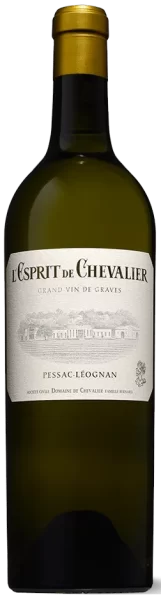
L'Esprit de Chevalier Blanc
Overview: Since 1986, the planting of young vines has meant that Domaine de Chevalier had to craft a second wine, both white and red. By calling its second wine L’Esprit de Chevalier, the Bernard Family wanted above all for it to carry the hallmark of Chevalier and to reflect the spirit, or “l’esprit,” of the estate. This wine combines power and complexity but also finesse and elegance in total respect of the terroir.
Appellation: Pessac-Léognan
Production Area: 7 hectares of white vines
Grape Varieties: Sauvignon Blanc, Semillon
Vinification: Fermentation and élevage in barrel.
Tasting Notes: Dry, rich, lively, and complex. Pure and specific aromas. L’Esprit de Chevalier blanc has a fruity and lively character, which is also more open and thus easier to appreciate in its youth.
Alcohol: 13%
Domaines Denis Dubourdieu
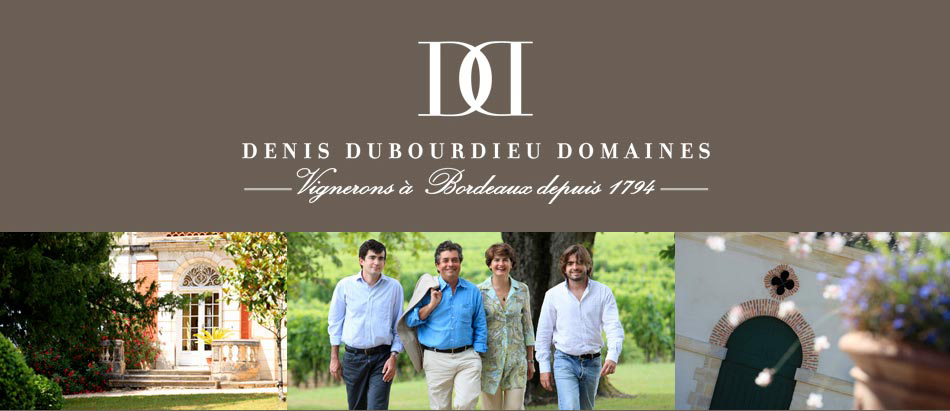
Overview: The Dubourdieu family comes from a long line of “vignerons,” or winemakers, from the Bordeaux region. Denis Dubourdieu and his wife Florence continue that tradition today, and with the help of their two sons, Fabrice and Jean-Jacques, they manage several estates: Chateau Doisy Daene, Clos Floridene, Chateau Reynon, Chateau Cantegril, and Chateau Haura. These estates cover an area totaling about 135 hectares, in the Sauternes, Graves, and Cadillac-Côtes de Bordeaux regions. Average production for the Domaines Dubourdieu total about 600,000 bottles per year, 60% of which are exported to 40 different countries.
For more information on Denis Dubourdieu, or has he’s known in some circles,”The Professor of Bordeaux”, follow the link to read Decanter’s profile on Dubordieu and his estates: Decanter’s Man of the Year
Location: Situated along the Garonne river, 35 km southeast of Bordeaux, the Domaines Denis Dubourdieu are located in Barsac in the Sauternes region, Pujols sur Ciron, Illats in the Graves region, and Béguey and Laroque in the Cadillac-Côtes de Bordeaux region. The terroir varies from estate to estate; on the right bank of the Garonne, the earth is quite hilly, whereas the left bank has pebbly terraces and calcareous plateaus.
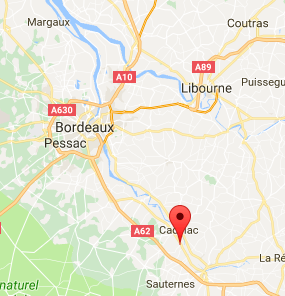
Overview: Located in Barsac in the Sauternes appellation, Château Doisy-Daëne (2eme Cru Classé in 1855) has been in the Dubourdieu family since 1924, and covers an area of about 18 hectares. For over 80 years, 3 generations of vine growers have used their talents to produce great sweet white wines: Georges (1924-1948), Pierre (1949-1999), and Denis since 2000.
Vines: The vines average more than 40 years of age. They are planted at a density of 7,000 vines per hectare, with 86% being Semillon, and 14% being Sauvignon Blanc. They are cared for with minimal treatments, no herbicides, and regular plowing between the vine rows to disrupt the growth of the more superficial roots. In an effort to balance the carbon footprint, the winery manages a forest area equal in size to the vineyards.
Soil: Typical of Barsac–a mix of red sand and clay, beneath which lies a bedrock of solid limestone peppered with fossilized shellfish and starfish. This particular soil composition is credited for blessing the wines with their trademark fresh acidity.
Viticulture:
 -Traditional ploughing is performed on the soil of our vineyard and no weed-killer is used.
-Organic manures are made with vegetal-based composts.
-Bud removal, trellising and leaf removal are carefully done by hand.
-We are engaged in a process of abandonment of the use of chemical synthetic pesticides on all of our vineyards.
-Thus “grown like in a garden”, within an orderly and well preserved environment, our vines produce early concentrated tasty grapes which have the smoothness and brightness of fresh fruit aromas we wish to obtain in our wines.
-In an effort to balance our carbon footprint, we manage as well a forest area equal in size to our vineyards.
The Wines:
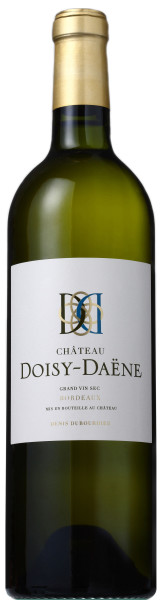
Château Doisy-Daëne Grand Vin Sec
Grape Varietals: 100% Sauvignon
Vinification: Once the grapes have ripened, a few bunches are collected on each vine from all the Sauvignon plots. After an eventual phase of skin contact, slow juice extraction takes place, protecting the grapes from oxidation. Free run must is strictly separated from press must, and clarification occurs through natural settling. Fermentation follows in oak barrels.
Aging: Lasts 8 months with lees regularly stirred
Tasting Notes: The Grand Vin Sec de Doisy-Daëne is one of the best Vins Blancs Secs of Bordeaux. Considered to be like Doisy-Daëne Barsac’s younger brother, it expresses in a different style all the distinction and finesse of this exceptional terroir. It possesses an unusual aromatic power, with grapefruit and white peach aromas in the bouquet, and flavors of pear and spice on the palate.
Cellaring Potential: Delicious when young, it also has great aging potential (5-10 years)
The Estate: Château Reynon, located in Beguey in the Premières Côtes de Bordeaux appellation, was purchased in 1958 by Florence Dubourdieu’s father, Jacques David. His daughter and son in law, Denis Dubourdieu, took over the vineyard in 1976. Thanks to their hard work, Château Reynon is today one of the most renowned Premières Côtes de Bordeaux estates.
The Vines: The red vineyard has a surface area of 20.5 ha, and is composed of 81 % Merlot, 6 % Cabernet Sauvignon, 13 % Petit Verdot. The density of the vineyard is 5,500 plants per hectare. The white vineyard is 12.8 hectares and is made up of 87 % Sauvignon and 13 % Sémillon. The density of the vineyard is 5,500 plants per hectare.
The Soil: Deep gravelly soil layers on clayey subsoil top a perfectly well drained hill. At mid-slope, the soils are clayey and calcareous and the rock protrudes in some areas. The soils are sandier at the foot of the slope.
The Wines:
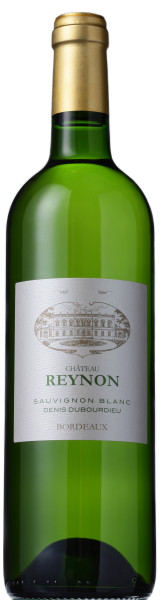
Chateau Reynon Blanc
Production Area: 8.5 ha
Grape Varietals: 100% Sauvignon Blanc
Harvest: Hand harvesting is performed in 1-2 selective pickings of the grapes when they have reached the optimum aromatic ripeness.
Vinification: After an eventual phase of skin contact, slow juice extraction takes place, protecting the grapes from the oxidation process. Free run must is strictly separated from press must, and clarification occurs by natural settling. Fermentation takes place in stainless steel vats.
Aging: Maturation sur lies, 50% in steel tanks and 50% in 60-80 hl wooden barrels, for 5-7 months before bottling.
Tasting Notes: The combined elements of soil quality, moderate production, and the fine wine-making process create an elegant and dry white wine, at once complex and tasty, with grapefruit and white peach aromas, and mineral and smoky hints.
Cellaring Potential: Remarkable aging potential of at least several years
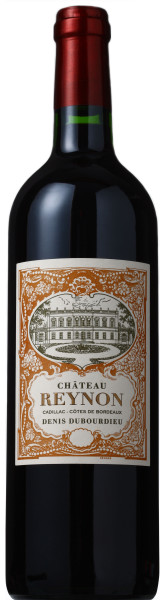
Chateau Reynon Rouge
Production Area: 20.5 ha
Grape Varietals: Merlot, Petit Verdot; Cabernet Sauvignon
Vinification: Ripened harvest is handpicked and undergoes 20-25 days maceration at moderate temperatures (25-30°C)
Aging: Aging takes place in oak barrels (a third of which is new) for 12 months
Tasting Notes: This wine has a deep color and subdued aromas of licorice, black currant, and smoke. The flavors are velvety, elegant, and powerful.
Food Pairings: Goes excellently well with beef and venison
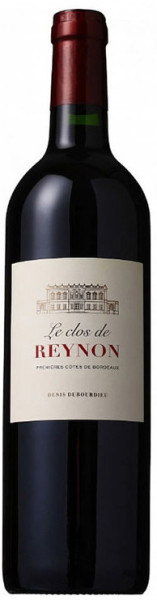
Le Clos de Reynon Rouge
Overview: Le Clos de Reynon is the second wine of Chateau Reynon
Grape Varietals: Merlot, Cabernet Sauvignon, Petit Verdot
Vinification: Ripened harvest is handpicked and undergoes 20-25 days maceration at moderate temperatures (25-30°C).
Aging: Aging takes place in oak barrels and stainless steel vats.
Tasting Notes: This is an elegant, ruby red wine, complex and tasty, with fruity and spicy aromas.
Food Pairings: Red meat
Cellaring Potential: 10-15 years
Location & History: Clos Floridène covers an area of 40 hectares in the Graves appellation. It lies mostly on the limestone plateau of Pujols sur Ciron (near Barsac), with a few portions located on the pebbly terraces of Illats. The name stems from the combination of the founders’ names – Denis and Florence Dubourdieu.
Established in 1982, Clos Floridène was originally a small, 2-hectare plot of land planted with old vines of Semillon and Muscadelle. There was the winemaker’s homestead, an old cellar, and 2-hectares of fallow land, which were immediately planted with Cabernet Sauvignon.
Over time, the vineyard was expanded through the purchase of adjacent plots of land. In 1991, Clos Floridène was substantially enlarged through the incorporation of Chateau Montalivet, a nearby 13-hectare vineyard.
The wines of Clos Floridène were first made in the cellar at Chateau Reynon. The first phase of building the cellar at Floridène started in 2004. The red Clos Floridène 2005 vintage was elaborated in this new facility.
The original historic homestead was also restored. It is now used as a bed & breakfast with an attached reception hall for hosting events and promoting wine tourism.
The renovation work was completed in 2018. In all, it took 36 years to launch Clos Floridène as an independent vineyard and winery, and today it is internationally known.
The Soils: From a geological standpoint, the soil of Pujols sur Ciron are much like the that of Barsac. A thin layer of red clayey sands rich in iron oxide, known as Barsac Red Sand, tops the limestone bed rock. This limits the vines’ roots growth to about 50 cm below ground. The water is stored within the slightly porous rock throughout the summer and is gradually released to the vines during the winter, thus preventing excessive water stress.
The Vines: The 17.3 hectare red vineyard has a high 72% Cabernet Sauvignon ratio combined with 28% Merlot. The plantation densities range between 5,500 plants (1.8 x 1m) and 7,140 (1.4 x 1m) plants per hectare. The 22.7 hectare white vineyard is composed of 56% Sémillon, 43% Sauvignon, and 1% Muscadelle. The plantation densities range between 5,500 plants (1.8 x 1m) and 7,140 (1.4 x 1m) plants per hectare.
The Wines:
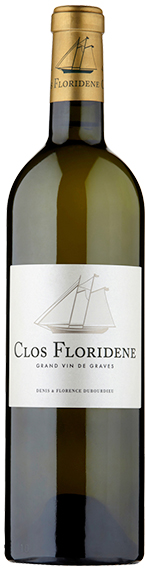
Clos Floridène Blanc
Appellation: Graves Blanc A.O.C
Production Area: 41 hectares
Soil: Clay-limestone
Grape Varieties: Sauvignon Blanc, Sémillon
Average Age of the Vines: 35 years old
Harvest: Manually done with one pass over or two if necessary. The grapes are picked at their optimum aromatic ripeness.
Vinification: After a slow phase of skin contact, a gentle juice extraction is performed, protected from the oxidation process. Free run must is strictly separated from press must and the clarification takes place by natural settling. Fermentation in barrels renewed by quarter.
Aging: 9 months with lees regularly stirred.
Tasting Notes: Clos Floridène Blanc has the characteristics of a white wine produced on calcareous soils: green-gold color, intense aroma with fruity notes of white peach, lemon, grapefruit, toasted and grilled nuances. Powerful and fresh flavors of fruit, with the density and structure of a great white wine.
Cellaring Potential: At least 10 years
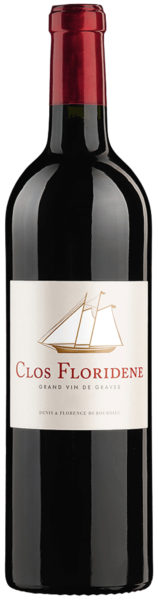
Clos Floridène Rouge
Grape Varieties: Cabernet Sauvignon, Merlot (percentages vary depending on the vintage)
Harvest: Ripened harvest is handpicked
Vinification: The grapes undergo 20 to 25 days maceration at moderate temperature (25°C to 30°C).
Aging: In oak barrels for 12 months (1/3 new wood)
Tasting Notes: Clos Floridène Rouge is strongly marked by an unusual association in Bordeaux–Cabernet-Sauvignon on calcareous soil. With a bright and intense color, it has black-currant and wild strawberry aromas, with hints of mint, licorice and smokiness. The fruit and tannins are powerful, silky, and fresh.